A professional hearing assessment is a step-by-step evaluation designed to give you a clear, accurate picture of your ear health. If you’ve noticed changes in your hearing, this article will walk you through exactly what to expect during your visit. Because hearing plays such a big role in your everyday life, taking this step early helps us get you the right support right away. Below, we’ll explain the roles of audiologists and hearing aid specialists (H.A.S.), the conditions we look for, and how you can easily prepare for your visit.
Key Takeaways
- A professional hearing assessment is a standardized, multi-test medical exam designed to evaluate hearing and related ear function.
- Audiologists carry out in-depth diagnostic testing; Hearing Aid Specialists focus on evaluations and fittings for amplification devices.
- Assessments can identify conductive, sensorineural, and mixed hearing loss, tinnitus, auditory processing issues, and middle-ear problems.
- A full evaluation commonly takes 60 to 90 minutes and includes case history, otoscopy, audiometry, tympanometry, and speech testing.
- Prepare by avoiding loud noise before your appointment and bringing prior audiology records or any listening devices you use.
- Results are summarized in an audiogram and other measures that guide treatment decisions, such as hearing devices or medical referrals.
- Pediatric testing uses age-appropriate behavioral methods to accurately assess children’s hearing.
- New regulations allow adults with mild-to-moderate hearing loss to purchase OTC hearing devices without a professional exam; this does not replace clinical care when needed.
- Follow-up visits track how well treatments are working; annual checks are commonly recommended.
- The term “hearing test” is commonly used to refer to various evaluations within a professional hearing assessment, encompassing tests like pure-tone audiometry and speech audiometry.
What Is a Professional Hearing Assessment and Why Is It Important?

A professional hearing assessment is much more than a quick screening, it is a comprehensive, evidence-based evaluation of your auditory system. Following the ASHA Preferred Practice Patterns for Audiology, we combine a detailed look at your medical history with a series of gentle tests.
These include visual otoscopy, tympanometry, acoustic reflexes, pure-tone air and bone conduction audiometry (using masking when needed), and speech audiometry (including speech-in-noise testing). If necessary, we may also measure otoacoustic emissions. This thorough process doesn’t just pinpoint hearing issues; it helps us protect your long-term hearing health. If you have any concerns, scheduling an audiologist appointment or hearing aid specialist (H.A.S.) appointment is the perfect place to start.
Who Are Audiologists and Hearing Aid Specialists (H.A.S.) and What Do They Do During Testing?
- Audiologists are licensed health professionals who diagnose and treat hearing, balance, and related nerve systems. They typically hold a clinical doctorate (AuD).
- Hearing Aid Specialists (H.A.S.) are licensed experts specialized in evaluating your hearing to find and fit the perfect hearing aids for your lifestyle.
Both can perform hearing assessments, though audiologists typically conduct a broader range of diagnostic tests and medical evaluations.
During your visit, they will guide you through each test, answer your questions, and explain your results. If you experience dizziness, they can also perform vestibular tests to check your balance. Follow by a sequence of assessments based on your history and symptoms. Their duties include performing visual ear inspections, and running audiometric and physiological tests such as pure-tone audiometry with bone conduction and masking, tympanometry with acoustic reflexes, speech testing in quiet and in noise, otoacoustic emissions, and vestibular tests when balance problems are a concern. They combine those results to make a diagnosis and recommend appropriate treatment or referrals.
Licensing rules differ by state. For example, here in Virginia, audiologists must be licensed by the state health board, which requires them to hold a clinical doctorate (AuD) and complete extensive supervised clinical hours. Hearing Aid Specialists are also fully licensed in most states, having passed rigorous exams and completed hands-on, supervised training specifically for safe hearing aid dispensing and evaluations.
What Conditions Can a Hearing Assessment Diagnose
By looking at how your ears process sound, a hearing assessment can identify different types of hearing challenges:
- Conductive, sensorineural, and mixed hearing losses: Air and bone conduction tests show whether a sound barrier exists in the outer/middle ear or whether the issue lies in the inner ear.
- Middle-ear issues: Tympanometry and acoustic reflex testing check the health of your eardrum and the three tiny middle-ear bones (ossicles), catching things like fluid buildup, Eustachian tube dysfunction, or otosclerosis.
- Real-world clarity: Speech-in-noise testing helps explain why it might be hard to follow conversations in busy restaurants.
- The assessment can also check for tinnitus (ringing in the ears) and auditory processing disorders.
The Modern Hearing Health Landscape and Regulatory Context
The hearing care field is changing under new regulations. The FDA now allows adults with perceived mild-to-moderate hearing loss to purchase self-fit Over-the-Counter (OTC) hearing devices without a professional evaluation. That said, children under 18 and adults with severe-to-profound hearing loss still require professional audiological exams and prescription devices tailored to their needs. Pediatric testing uses specialized behavioral methods to match a child’s developmental level. See the Centers for Disease Control and Prevention for broader hearing health resources.
How Long Does a Professional Hearing Assessment Take?
Most comprehensive hearing evaluations last between 60 and 90 minutes, depending on which tests are needed and how the patient responds. Pediatric or vestibular assessments can take longer.
How Should You Prepare for Your Professional Examination?
Good preparation helps ensure accurate results and a smooth visit. Before your appointment:
- Bring any previous audiology records and your current listening devices.
- Note recent ear infections, sudden hearing changes, or balance symptoms.
- Avoid loud noise exposure for 24 hours before testing.
- Be ready to describe the communication challenges you face in daily life.
What Happens Step-by-Step During a Professional Audiology Evaluation?
Knowing the typical order of tests can make you feel comfortable and relaxed. A standard professional evaluation usually follows this sequence:
- Welcome & Case History: Your visit starts with a relaxed conversation about your medical history, any noise exposure, and the specific communication struggles you’re experiencing.
- Visual Otoscopy: The audiologist takes a quick, painless look inside your ear canal using a small lighted magnifier called an otoscope—just checking for everyday earwax, irritation, or signs of middle-ear issues like eardrum perforations.
- Tympanometry and Acoustic Reflex Testing: Next, a soft tip is placed in your ear to measure how well your eardrum moves. You will feel a very gentle shift in air pressure—it’s completely painless and helps detect middle-ear fluid or ossicular chain fixation.
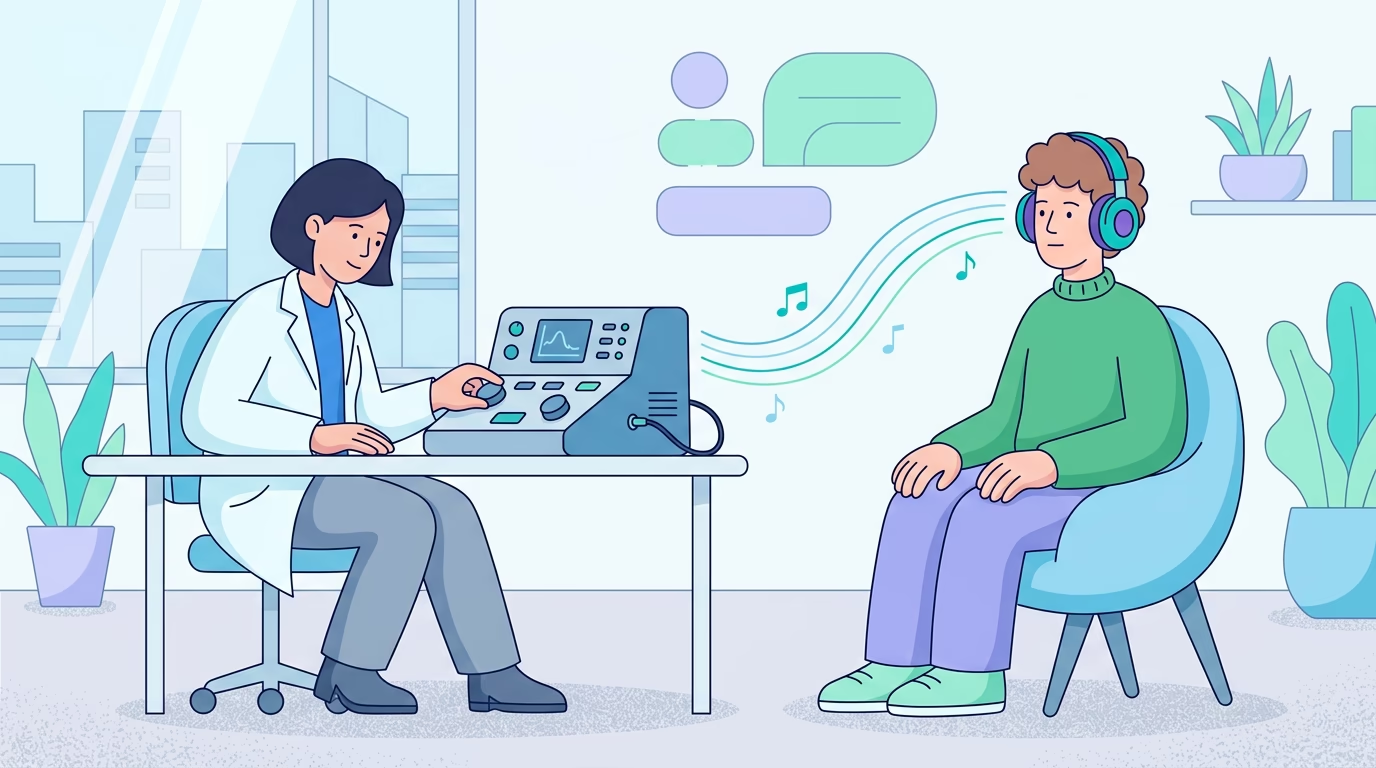
- Pure Tone Audiometry (Air and Bone Conduction) with Masking: You will wear comfortable headphones and listen for tones at different pitches. To find your exact hearing thresholds, the test also uses bone conduction (a small device placed gently behind your ear) and masking (a soft rushing sound in one ear) to isolate each ear’s performance.
- Speech Audiometry and Speech-in-Noise Testing: You’ll repeat a series of words spoken at different volumes, both in a quiet setting and with a bit of background noise, to see how clearly you process speech in daily life.
- Otoacoustic Emissions (OAE) Testing: This quick, automated test measures the natural, microscopic echo generated by your inner ear’s outer hair cells. It is especially helpful when testing children.
- Vestibular (Balance) Assessment (If Needed): If you’ve been feeling dizzy, the audiologist may perform specialized balance tests like videonystagmography.
- Reviewing Your Results: Finally, you and your audiologist will look at your audiogram together. The findings will be explained clearly, along with the best next steps for your lifestyle—whether that means a medical referral, a customized hearing device, or a simple care plan.
Understanding Your Professional Hearing Assessment Results

Your clinician combines data from the battery of tests to form a detailed picture of your hearing. The audiogram plots the softest sounds you hear across frequencies and reveals the type and severity of hearing loss—conductive, sensorineural, or mixed. Conductive losses often involve the middle ear structures, affecting sound transmission before the inner ear, while sensorineural losses relate to inner ear or auditory nerve issues. These results steer treatment recommendations, whether that’s amplification, medical referral, or auditory therapy. Early, accurate interpretation supports better outcomes and improved daily communication.
When Is Further Treatment or Device Recommendation Needed?
If testing shows significant hearing deficits, the clinician will discuss next steps—amplification options, medical or surgical referrals, or balance therapy—tailored to your lifestyle and goals. Middle ear problems like chronic fluid or ossicular damage may require medical or surgical intervention. Addressing hearing loss early typically improves communication and quality of life.
What Is the Follow-Up or Reassessment Process?
Follow-up visits confirm that treatments are effective and that your hearing is stable. Initial follow-ups often occur within weeks after a device fitting or diagnosis, and many clinicians recommend annual hearing checks to monitor changes and adjust care as needed.
Special Considerations for Pediatric Hearing Assessments
Children need age-appropriate testing—behavioral observation audiometry, visual reinforcement audiometry, or play audiometry—depending on their developmental level. Early, thorough pediatric assessment is essential for detecting congenital or acquired hearing loss so intervention can begin promptly and support the child’s speech and learning.
The Modern Hearing Health Landscape and Regulatory Context
For adults with mild-to-moderate hearing loss, the FDA now allows the purchase of self-fit Over-the-Counter (OTC) hearing devices without a doctor’s visit. However, a professional exam is still highly recommended to rule out underlying medical issues. Please note that children under 18 and adults with severe-to-profound hearing loss always require professional evaluations and customized prescription devices.
How to Prepare Financially for Your Assessment
Coverage varies by plan. Original Medicare doesn’t cover routine hearing exams or hearing aids, though Medicare Part B covers medically necessary diagnostic exams. Recent policy updates allow patients to see an audiologist or hearing aid specialist for non-urgent care once every 12 months without a physician referral. For specifics, consult the CMS Medicare Audiology Services Guidelines.
By knowing the steps and scope of a professional audiology exam, you can approach your hearing health with confidence. Working with audiologists and hearing aid specialists helps you get personalized care that supports better hearing and balance. To schedule an audiology examination or hearing aid specialist appointment, visit our contact page and book your evaluation today.
Conclusion
Undergoing a professional hearing assessment clarifies what’s happening with your hearing and opens the door to targeted care. Understanding the tests and the roles of audiologists and Hearing Aid Specialists helps you make informed decisions and feel confident about your next steps. Schedule an evaluation to get personalized recommendations and begin improving your hearing health today.
Frequently Asked Questions
What can I expect during a pediatric hearing assessment for my child?
Testing a child’s hearing looks very different from testing an adult’s—and that’s by design. The assessment is adapted to your child’s age and stage of development, often turning the whole thing into a game. For example, visual reinforcement audiometry rewards your little one with a fun visual, like a dancing toy, every time they respond to a sound, while play audiometry keeps older toddlers engaged by making listening part of playtime. These appointments can take a bit longer, and that’s perfectly normal; the goal is accurate results, not speed. Catching hearing concerns early makes a real difference in supporting your child’s speech, language, and learning.
How do Over-the-Counter (OTC) hearing devices differ from prescription hearing aids?
Great question, and one that comes up a lot. OTC devices are designed for adults with mild-to-moderate hearing loss and can be purchased right off the shelf with no exam or prescription needed. Prescription hearing aids are a different experience entirely: they’re programmed specifically to your hearing test results, fitted to your ear, and fine-tuned over time with features tailored to your daily life. For moderate to severe hearing loss, or anything more complex, prescription devices are usually the better path.
Are there any risks associated with purchasing OTC hearing devices?
OTC devices have made hearing help more accessible, which is wonderful, but there are a few things to be aware of. Without a proper evaluation, it’s easy to misjudge your own hearing loss, end up with the wrong level of amplification, or get a poor fit. More importantly, an underlying medical condition could go unnoticed. A professional hearing test first is a simple step that ensures an OTC device is actually right for you, and gives you peace of mind either way.
What factors influence the choice between hearing aids and other treatment options?
There’s no one-size-fits-all answer here, and honestly, that’s a good thing. The right choice depends on the type and degree of your hearing loss, your lifestyle, your personal preferences, and your budget. An audiologist looks at the full picture with you and recommends what will genuinely work best, whether that’s a hearing device, a referral to a physician, a surgical option, or a rehabilitation plan. You’ll never be pushed toward something that doesn’t fit your life.
How often should adults undergo hearing assessments?
For most adults, a hearing check every one to three years is a healthy habit, especially after age 60 or if you’ve spent time around loud noise. Hearing often changes gradually, so regular testing catches shifts you might not notice day to day. If you already wear hearing devices, an annual visit keeps them performing at their best and adjusted to any changes in your hearing.
What are the benefits of early detection of hearing loss?
Simply put: the earlier hearing loss is found, the easier it is to stay connected to the people and activities you love. Early treatment supports clearer communication, helps prevent the social withdrawal that untreated hearing loss can cause, and may even reduce the risk of related concerns like cognitive decline. Addressing it promptly protects your quality of life, at home, at work, and everywhere in between.
Can lifestyle choices impact hearing health?
They absolutely can. Long-term exposure to loud noise, certain medications, smoking, and overall health habits all play a role in hearing over time. The good news is that small choices add up: wearing hearing protection in noisy environments, taking care of your general health, and being mindful of medications that can affect hearing all help preserve it. Pair that with regular check-ups, and you’re giving your ears the best chance to stay healthy for years to come.