
When we think about hearing care, we often focus on making sounds louder or clearer. But behind every sound entering the ear is a complex relationship between your hearing system and your mind. Far from being just a matter of volume, how we hear directly influences how our minds process, organize, and store daily information.
At our audiology clinic, we see firsthand how untreated hearing loss affects overall brain health. When speech becomes difficult to understand, your mind works double time to fill in the blanks, which can lead to listening exhaustion, elevated stress, and social isolation. Exploring the connection between hearing loss and cognitive decline highlights why compassionate, specialist-led hearing care is essential for long-term health and independence.
Understanding the Link Between Hearing Loss and Brain Health
- Mental Load & Energy: Untreated hearing loss forces the mind to divert cognitive energy toward decoding garbled speech, draining the reserve that normally protects memory and executive function.
- A Major Modifiable Risk Factor: According to the Lancet Commission on Dementia, midlife hearing loss is the single largest modifiable risk factor for dementia, accounting for roughly 7% of preventable cases worldwide.
- Severity Multiplies Risk: Dementia risk increases with hearing loss severity—mild hearing loss roughly doubles the risk, moderate loss triples it, and severe loss increases it fivefold.
- Clinical Proof of Protection: The landmark ACHIEVE trial (Aging and Cognitive Health Evaluation in Elders) showed that a structured hearing intervention using custom digital hearing aids and audiologic counseling slowed three-year cognitive decline by 48% in older adults at higher risk.
- Self-Reporting Is Unreliable: A major study found that 66% of older adults had clinically confirmed hearing loss, yet only 37% realized they had a problem, proving why objective testing by a licensed audiologist matters.
- Groundbreaking Virginia Research: Scientists at UVA and VCU are advancing inner ear hair cell repair discoveries and digital biomarker tools that connect hearing health to early dementia detection.
How Does Untreated Hearing Loss Affect Cognitive Function?
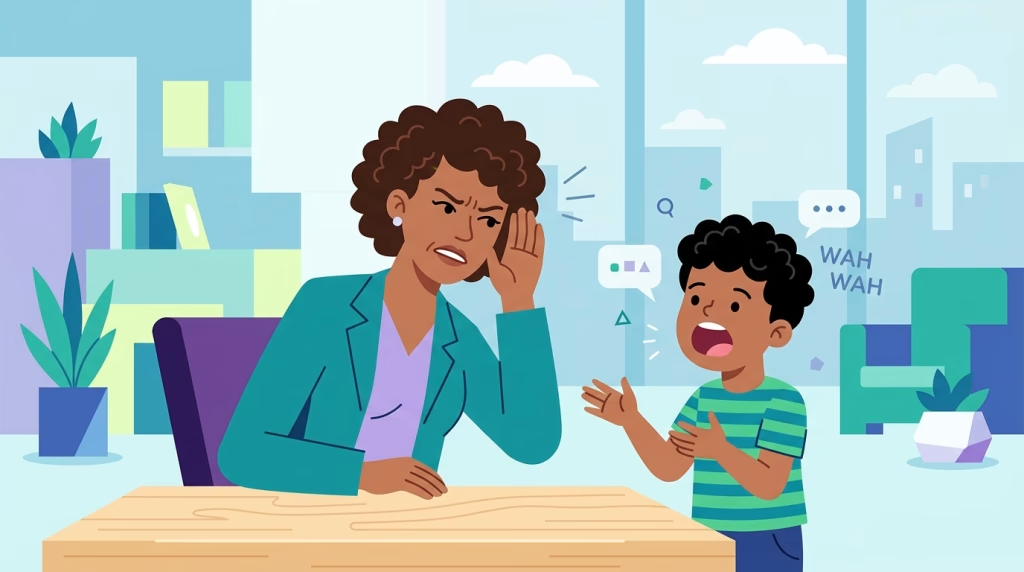
Age-related hearing loss (presbycusis) usually develops so gradually that you might not notice it at first. When sound signals reaching the inner ear become faint or distorted, central executive pathways can no longer process speech effortlessly. Instead, your mind has to constantly borrow bandwidth from memory centers just to figure out what people are saying.
This constant effort causes genuine mental fatigue, reduced concentration, and difficulty remembering details. Over time, this extra effort drains your cognitive reserve—the mental cushioning that helps you stay sharp as you age. Studies supported by the National Institute on Aging emphasize that addressing sensory loss early helps protect these critical cognitive reserves.
Public health research, including the Lancet Commission on Dementia, designates midlife hearing loss as the leading modifiable risk factor for dementia. Pioneer researchers like Dr. Frank Lin (Lin FR) at Johns Hopkins University demonstrated that untreated sensory loss significantly accelerates mental decline. Addressing hearing health belongs alongside managing modifiable lifestyle factors like smoking, physical inactivity, or high blood pressure.
Across Virginia, the public health impact is clear. The Virginia Dementia State Plan reports that approximately 150,000 Virginians were living with dementia in 2020, a figure projected to reach 190,000. Furthermore, over 300,000 Virginians aged 45 and older report subjective cognitive decline—experiencing noticeable memory changes or confusion.
Longitudinal studies demonstrate a clear relationship between hearing impairment and dementia risk:
- Mild Hearing Loss: Doubles the relative risk of developing dementia.
- Moderate Hearing Loss: Triples the relative risk of developing dementia.
- Severe Hearing Loss: Increases the relative risk of developing dementia by five times compared to individuals with normal hearing.
What Are the Brain Changes Resulting from Hearing Loss?
Understanding the link between hearing loss and dementia involves looking at three primary physiological and behavioral pathways:
- Increased Cognitive Load: When auditory signals arriving at the primary auditory cortex are garbled, prefrontal networks must work overtime to decode incoming words. This heavy lifting leaves fewer cognitive resources for working memory and complex reasoning.
- Sensory Deprivation and Neural Atrophy: The mind relies on continuous input. When damaged ear structures deprive sensory regions of sound, neurons in the temporal lobe experience reduced stimulation, which can accelerate tissue shrinkage. Neuroimaging studies reveal accelerated volume loss in the temporal lobe and hippocampus—areas vital for memory and language comprehension.
- The Psychosocial Isolation Cascade: Straining to catch words during group conversations often leads to frustration and withdrawal. To avoid stressful situations, individuals with unaddressed hearing loss frequently pull back from family dinners and social hobbies. Social isolation itself raises dementia risk by 27% to 30% while contributing to depression, as the mind loses out on active conversation and meaningful human connection.
Cutting-Edge Virginia Research: Uncovering the Sensory-Cognitive Connection
Virginia is home to premier academic centers advancing our understanding of sensory health, early detection, and neurological wellness.
1. Inner Ear Hair Cell Repair Discoveries at the University of Virginia (UVA)
At the UVA School of Medicine, Dr. Jung-Bum Shin’s neuroscience lab discovered how delicate inner ear hair cells repair themselves after acoustic damage. Sensory hair cells rely on microscopic antenna-like structures called stereocilia—built around an actin protein core—to translate sound vibrations into electrical signals.
While lost hair cells do not regrow, UVA researchers discovered that damaged stereocilia deploy a specialized repair protein called XIRP2. This protein senses structural damage in the actin core and patches it. Supported by over $2.3 million in NIH funding, this discovery opens up possibilities for treatments targeting hearing loss, tinnitus, and conditions like Alzheimer’s disease.
Dr. Anelyssa D’Abreu, a geriatric neurologist at UVA Health, emphasizes that evaluating and treating hearing loss early with custom amplification helps preserve cognitive reserve, especially in patients with existing memory or cardiovascular risk factors.
2. Digital Biomarkers and Community Health at Virginia Commonwealth University (VCU)
At the VCU School of Nursing, Dr. Lana Sargent and Dr. Chung were awarded a $3.1 million NIH grant to evaluate how daily mobility and physical movement act as early warning signs for dementia. Using wearable sensor technology (RAMS), VCU researchers monitor balance and spatial navigation in older adults. Because inner ear structures govern both hearing and balance, age-related hearing loss often correlates with fall risks and movement changes.
Simultaneously, VCU’s Richmond Brain Health Initiative (RBHI) provides community-based memory screenings and audiology referrals in underserved areas. In local community surveys, over 70% of participants expressed memory concerns and requested routine brain health evaluations, demonstrating the importance of accessible care.
3. Diagnostic Insights Across Virginia Health Systems
A study analyzing electronic health records across UVA Medical Center and Carilion Clinic examined 13,431 adults diagnosed with dementia or Alzheimer’s disease. The findings highlighted age-related hearing loss as one of the most prominent co-occurring conditions, demonstrating why routine hearing care should be an integral component of overall health evaluations.
How Do Hearing Devices Help Protect Cognitive Function?
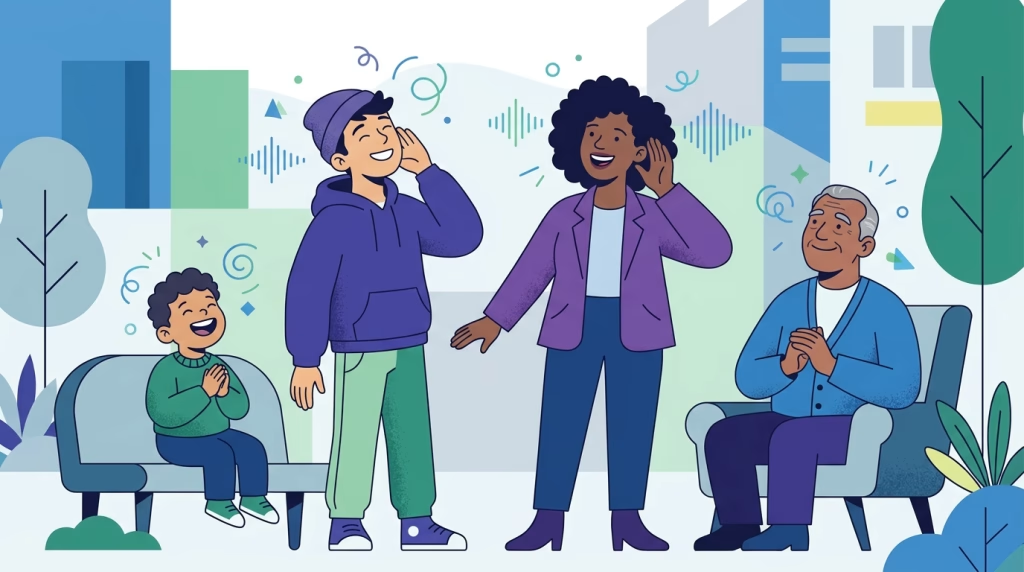
Custom prescription hearing aids are sophisticated tools designed to restore clarity and reduce mental strain. By precisely amplifying missing frequencies and filtering out ambient noise, a modern hearing aid makes listening feel effortless again.
This reduction in listening effort frees up cognitive resources for memory retention, attention, and executive tasks. Furthermore, consistent hearing aid use restores confidence, helping individuals stay connected to conversations and social activities.
The ACHIEVE Trial: Clinical Evidence of Protection
The landmark Aging and Cognitive Health Evaluation in Elders (ACHIEVE) trial—funded by the National Institute on Aging and the NIH—offered clear evidence regarding a structured hearing intervention:
- Among older adults at increased risk for cognitive decline (such as those with cardiovascular risk factors), treating hearing loss with digital hearing aids and audiologic counseling slowed the rate of three-year cognitive decline by 48%.
- The trial demonstrated that comprehensive hearing care helps protect processing speed, working memory, and executive function in higher-risk populations.
What Types of Hearing Aid Technologies Offer the Best Support?
Whether exploring advanced prescription hearing devices or over-the-counter hearing aids, choosing technology matched to your acoustic environment makes a substantial difference.
| Hearing Device Technology | How It Works | Direct Cognitive & Functional Impact |
| Digital Signal Processing & Noise Reduction | Advanced algorithms analyze sound in real time, suppressing background noise while boosting speech clarity. | Improves Signal-to-Noise Ratio (SNR), significantly reducing prefrontal listening strain and mental fatigue. |
| Adaptive Directional Microphones | Dual microphones focus directly on speech in front of you while filtering out ambient background chatter. | Eases speech understanding in busy social settings, lowering frustration during group conversations. |
| Bluetooth Wireless Connectivity | Streams phone calls, television audio, and remote microphones directly into your hearing aids. | Delivers clear, direct sound without room echo, helping older adults maintain easy communication. |
| Rechargeable Battery Systems | Long-lasting lithium-ion power cells provide 24+ hours of continuous daily use. | Eliminates small battery changes, encouraging consistent daily hearing aid use for steady brain stimulation. |
Why Comprehensive Hearing Assessments Are Essential
It is common to assume that if you had significant hearing loss, you would realize it right away. However, clinical data published in journals like JAMA Neurology and JAMA Otolaryngology–Head & Neck Surgery reveals a clear gap between perceived hearing and actual hearing health.
In a study following nearly 3,000 older adults over eight years:
- 66% of participants had clinically confirmed hearing loss on objective tests, yet only 37% realized they had a problem.
- Self-reported hearing difficulty showed no association with dementia risk, whereas clinically measured hearing loss accounted for up to 32% of dementia cases.
Because sensory loss happens gradually, the mind compensates, making it difficult to detect without clinical testing. An unaddressed hearing issue can quietly drain mental energy for years before being identified by an audiologist.
Essential Tests in an Audiology Evaluation
A comprehensive clinical assessment involves much more than pressing a button when you hear a tone:
- Pure-Tone Audiometry: Measures pitch-specific hearing sensitivity across frequencies to determine the exact pattern of hearing loss.
- Speech Recognition Testing: Measures how accurately you understand words delivered at a comfortable, clear volume.
- Speech-in-Noise (QuickSIN) Testing: Evaluates how well central auditory pathways process speech against multi-talker background noise—a sensitive indicator of cognitive listening effort.
- Middle Ear Evaluation (Tympanometry): Assesses eardrum compliance and middle ear pressure to rule out temporary conductive issues, such as earwax buildup.
What Are the Early Signs Linking Hearing Loss to Cognitive Impairment?

Recognizing early warning signs allows you to seek care before listening fatigue or social withdrawal impacts your quality of life. Watch for these common signs:
- Struggling in Noise: Difficulty catching words during group conversations or in noisy restaurants.
- Listening Exhaustion: Feeling completely drained or experiencing headaches after attending social gatherings or meetings.
- Frequent Requests for Repetition: Thinking that family members or friends are constantly mumbling.
- Social Withdrawal: Opting to stay home or remaining quiet during gatherings because following conversations feels exhausting.
- Memory Distractions: Forgetting details from recent conversations because your mind was overwhelmed trying to decode the words in real time.
Protecting Your Hearing and Cognitive Vitality with Professional Care
Taking proactive control of your hearing is one of the most effective choices you can make to maintain your independence, protect your memory, and stay connected to what matters most.
By scheduling routine clinical evaluations with a licensed audiologist and committing to consistent hearing aid use when recommended, you give your mind the crisp auditory input it needs to thrive.
At Audiology Hearing Aid Associates, our team—including our licensed audiologists, dedicated patient care coordinator, and audiology assistant staff—is committed to delivering compassionate, evidence-based patient care tailored to your unique lifestyle. We don’t just fit devices; we partner with you for lifelong hearing wellness.
Schedule Your Evaluation Today
If you or a loved one have noticed changes in speech clarity, increased listening effort, or difficulty hearing in noisy environments, our team is here to help. Contact our clinic today to schedule a comprehensive evaluation and take an active step toward protecting your auditory and cognitive health.
Frequently Asked Questions
What percentage of dementia cases are linked to hearing loss?
The Lancet Commission on Dementia identifies midlife hearing loss as the single largest modifiable risk factor for dementia, responsible for roughly 7% of preventable cases worldwide. Furthermore, long-term observational research examining objective data in journals like JAMA Otolaryngology–Head & Neck Surgery and JAMA Neurology found that clinically measured hearing loss was linked to up to 32% of dementia cases. Because self-reported hearing trouble showed no measurable link, objective testing by a licensed audiologist is critical.
Can treating hearing loss actually slow cognitive decline?
Yes. The landmark ACHIEVE trial (Aging and Cognitive Health Evaluation in Elders), supported by the National Institute on Aging and the NIH, demonstrated that a personalized hearing intervention using digital hearing aids and audiologic counseling slowed three-year cognitive decline by 48% in older adults at increased risk, particularly preserving processing speed, working memory, and executive function.
Why do so many people wait years before treating their hearing loss?
Age-related hearing loss develops so gradually that the mind compensates automatically, making it hard to notice without formal clinical testing. In fact, a study of nearly 3,000 older adults found 66% had clinically confirmed hearing loss, yet only 37% realized it—allowing untreated hearing loss to quietly drain cognitive energy for years.
How does social isolation from hearing loss affect brain health?
Struggling to follow a fast-paced conversation often causes people to pull back from family gatherings and social events. Social isolation itself increases dementia risk by roughly 27% to 30%, while contributing to depression, because the brain misses out on the dynamic stimulation of active human connection.
Can damaged inner ear hair cells repair themselves?
While dead hair cells in the ear cannot be replaced once lost, UVA researchers discovered that damaged stereocilia can self-repair using a protein called XIRP2, which patches structural breaks with new actin. This exciting breakthrough paves the way for future treatments targeting hearing loss, tinnitus, and associated cognitive decline.