Pediatric hearing testing can feel like a lot for parents to take in. When a child struggles to communicate or doesn’t pass a newborn hearing screening, knowing what each test checks makes the process far less daunting. Pediatric audiology relies on physiological tools like Otoacoustic Emissions (OAE) testing, Auditory Brainstem Response (ABR) testing, Auditory Steady-State Response (ASSR), and tympanometry, alongside behavioral assessments like Visual Reinforcement Audiometry (VRA), play audiometry, and pure tone audiometry.
Understanding how these tests work, and how Virginia’s public health initiatives support families, can help parents advocate for their child’s development.
Understanding Pediatric Hearing Evaluation Results
- Pediatric hearing evaluation combines objective physiological tests (OAE, ABR, ASSR, tympanometry) with interactive behavioral tests (VRA, play audiometry, pure tone audiometry) to build a complete picture of a child’s hearing.
- OAE testing is a quick, non-invasive check of inner-ear (cochlear) function and a core tool in newborn hearing screening.
- ABR testing (sometimes still called BAER, or brainstem auditory evoked response testing, in older clinical literature) measures how the auditory nerve and brainstem transmit sound signals to the brain, and is often used as a diagnostic follow-up when a newborn doesn’t pass an initial screening.
- Tympanometry checks how well the eardrum moves in response to air pressure, helping rule out middle-ear issues like fluid buildup.
- Auditory Steady-State Response (ASSR) testing can supplement an ABR test to help estimate hearing thresholds at specific frequencies.
- Visual Reinforcement Audiometry (VRA) uses conditioned head-turns rewarded with a visual cue to test hearing in infants and toddlers aged 6 to 24 months.
- Play audiometry turns hearing testing into a simple game for children aged 2 to 5, helping determine hearing thresholds for each ear.
- Pure tone audiometry is used with older, verbal children to map out hearing thresholds across a range of frequencies.
- Virginia’s EHDI program follows 1-3-6 benchmarks: hearing screening by 1 month of age, diagnostic evaluation by 3 months for babies who don’t pass, and enrollment in early intervention services by 6 months for babies diagnosed with hearing loss, so developmental delays from undetected hearing loss can be prevented.
Physiological vs. Behavioral Hearing Testing: What Parents Need to Know
A foundational principle in pediatric hearing evaluation is the distinction between physiologic function and conscious hearing perception.
- Physiologic Tests (OAE, ABR, ASSR, and tympanometry): These objective measurements evaluate whether the physical ear structures and neural pathways are responding to sound. They do not require an active behavioral response from the child, making them ideal for newborns, infants, or children with developmental delays.
- Behavioral Tests (VRA and CPA): As highlighted in a landmark study published in Pediatric Clinics of North America, behavioral assessments remain the gold standard for measuring true hearing perception. These tests require the child to consciously recognize a sound and respond through a conditioned action.
That’s why audiologists routinely pair objective physiological measures with behavioral tests; together, they paint a complete, accurate picture of a child’s hearing.
Otoacoustic Emissions (OAE) Testing: Checking Cochlear Function
An otoacoustic emissions test is a quick, non-invasive method used to assess the function of the inner ear (cochlea).
During an OAE test, a miniature probe is placed gently in the child’s ear canal. The probe emits low-intensity sounds and records the natural acoustic energy returned by the inner ear. As demonstrated in ground-breaking Otoacoustic emissions research by Dr. David Kemp, healthy microscopic sensory hair cells in the cochlea vibrate when processing sound, generating tiny sound waves that echo back into the ear canal.
Key Benefits of OAE Testing:
- Rapid & Non-Invasive: Requires no active participation and can be completed in minutes while an infant is resting or sleeping.
- Cochlear Sensitivity: Highly effective at ruling out sensorineural hearing loss originating in the inner ear.
- Screening Standard: A core tool for universal newborn hearing screening programs nationwide.
Auditory Brainstem Response (ABR) Testing: Evaluating Auditory Neural Pathways
The auditory brainstem response test measures how the auditory nerve and brainstem transmit sound signals from the ear to the brain. It’s one of the most widely used diagnostic tools in pediatric audiology, and an ABR test is often the first step recommended after a missed newborn screening.
During an ABR assessment, small sensor electrodes are placed on the child’s forehead and behind the ears. Soft earphones deliver click or tone-burst sounds, and the electrodes measure the brain’s electrical activity in response to those sounds.
When Is an ABR Test Used?
- Newborn Diagnostic Evaluations: Used as a diagnostic follow-up when an infant does not pass an initial hospital newborn screen.
- Frequency-Specific Threshold Estimation: Helps audiologists estimate specific hearing thresholds across different pitches when children are too young for behavioral testing, sometimes alongside an ASSR test for added precision (see below).
- Auditory Pathway Assessment: Identifies complex auditory conditions, such as Auditory Neuropathy Spectrum Disorder (ANSD), where sound enters the ear normally but fails to transmit clearly to the brain.
Because ABR testing requires the child to remain completely still, it is typically performed while infants under six months of age sleep naturally. Once test results are reviewed, the audiologist can determine whether further diagnostic testing, monitoring, or early intervention is needed.
Auditory Steady-State Response (ASSR) Testing
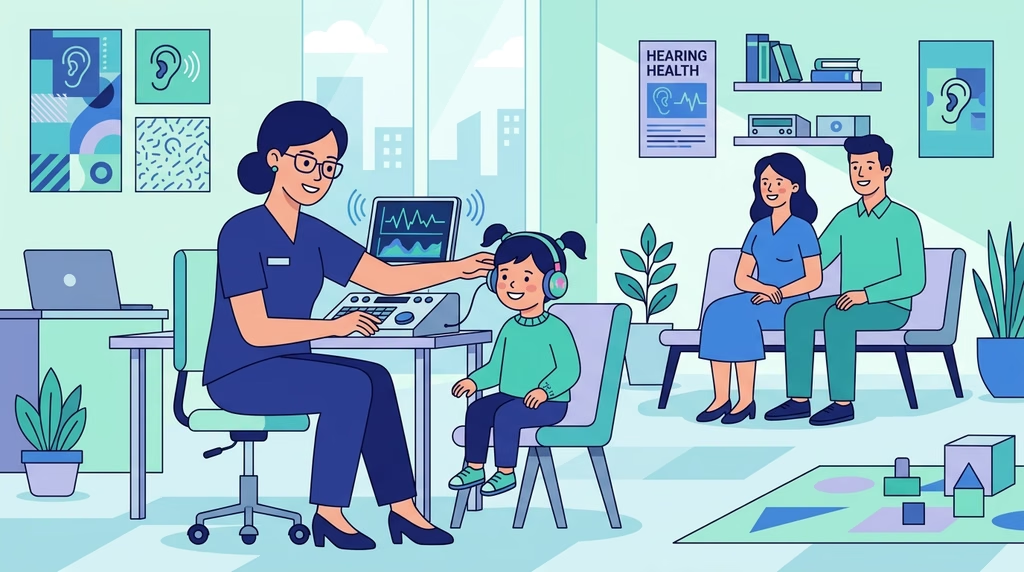
Auditory Steady-State Response (ASSR) testing is a physiological test often used alongside ABR to help pinpoint hearing thresholds at specific frequencies, especially in infants with more significant hearing loss where standard ABR results may be harder to interpret. Like ABR, ASSR requires no active response from the child and is typically completed while the infant sleeps, using small sensors to track the brain’s electrical response to continuous tones. Audiologists often turn to ASSR when they need a fuller frequency-specific picture than ABR alone can provide.
Tympanometry: Checking Middle-Ear Function
Tympanometry is a quick physiological test that checks how well the eardrum (tympanic membrane) moves in response to changes in air pressure. A small probe is placed at the opening of the ear canal, and the device measures eardrum movement as air pressure is gently varied; the whole test typically takes just a few seconds per ear.
Unlike OAE or ABR, tympanometry doesn’t measure hearing thresholds directly. Instead, it helps identify middle-ear problems, such as fluid behind the eardrum, a perforation, or eustachian tube dysfunction, that can affect hearing and may explain why a child didn’t pass a newborn hearing screening or a routine screening later in childhood. Because of this, tympanometry is frequently used as a complementary test alongside OAE, ABR, or behavioral audiometry to help pinpoint the underlying cause of a hearing concern.
Visual Reinforcement Audiometry (VRA): For Infants and Toddlers (Ages 6 to 24 Months)
Once infants reach approximately 6 months of developmental age, they acquire the head-turn control required for Visual Reinforcement Audiometry (VRA).
During a VRA assessment, the child sits on a parent’s lap inside a sound-treated room. Sounds are played through speakers or earphones. When the child turns their head toward the sound source, they are immediately rewarded with a visual reinforcer, such as an animated toy or video display.
VRA allows audiologists to reliably measure hearing thresholds across various frequencies in infants and young toddlers before they are old enough to follow complex instructions.
Play Audiometry: Making Testing Fun (Ages 2 to 5 Years)
Play audiometry is a specialized hearing test designed for young children, often effective for those aged 2 to 5, turning hearing evaluation into an engaging game for toddlers and preschool-aged children.
During a play audiometry session, a child is taught to perform a simple, fun motor task whenever they hear a tone, such as dropping a block into a bucket, placing a peg on a board, or stacking a ring. This game-based structure keeps young children focused and cooperative while allowing the clinician to determine exact hearing thresholds for each ear individually. As children get more comfortable with the game format, play audiometry can also serve as a bridge toward more standard pure tone audiometry as they approach school age.
Pure Tone Audiometry: For Older, Verbal Children
Pure tone audiometry is the standard hearing test most people picture: a child wears headphones and raises a hand, presses a button, or otherwise responds each time they hear a tone, across a range of pitches and volumes. It’s typically used once a child is old enough (generally around school age) to reliably follow these instructions on their own, rather than needing the game-based prompts used in play audiometry or the head-turn response used in VRA.
Pure tone audiometry produces an audiogram, a chart plotting the softest sounds a child can hear at different frequencies in each ear. This gives audiologists precise, ear-specific threshold information and is often the test used for ongoing monitoring once a child is old enough to cooperate reliably.
| Age Range | Testing Methodology | Procedure Description |
|---|---|---|
| Birth – 6 Months | Physiological | Objective evaluation via OAE and ABR tests while infant is sleeping. |
| 6 – 24 Months | VRA | Visual Reinforcement Audiometry using conditioned head-turns. |
| 2.5 – 5 Years | Play Audiometry | Conditioned motor tasks (e.g., dropping blocks) during active play. |
Why Early Hearing Detection Is Crucial for Child Development

A child’s first three years are a critical window for learning language and speech. When hearing loss goes unaddressed during that time, it can create an auditory barrier with real, lasting effects on development.
- Preventing Cognitive Overload: When children have undetected hearing loss, their brains must expend extra mental energy decoding incomplete acoustic signals. This leaves fewer cognitive resources for working memory and learning, often leading to severe listening fatigue and behavioral exhaustion. To learn more about this connection, read our detailed article on hearing and cognitive development.
- Supporting Speech & Literacy: Clear access to high-frequency sounds (such as /s/, /f/, and /th/) is necessary for children to master grammar, vocabulary, and early reading skills.
- Protecting Auditory Brain Pathways: Without consistent auditory stimulation during early childhood, the brain’s visual processing networks can take over unstimulated auditory regions, a phenomenon known as cross-modal neuroplasticity, making future hearing aids or cochlear implant rehabilitation more complex.
Navigating Early Hearing Intervention in Virginia: The 1-3-6 Guidelines
Families in Virginia have a strong public health system behind them when it comes to pediatric hearing evaluations. The Virginia Early Hearing Detection and Intervention (VA EHDI) program follows national “1-3-6” benchmarks designed to eliminate diagnostic delays:
- Screen by 1 Month: Every newborn should receive a hospital hearing screening prior to discharge or before 1 month of age.
- Diagnose by 3 Months: Infants who do not pass their initial screening should receive a comprehensive diagnostic evaluation by an audiologist, typically including an ABR test and, when needed, tympanometry or ASSR testing, prior to 3 months of age.
- Intervene by 6 Months: Infants diagnosed with hearing loss should begin appropriate early intervention services and amplification fitting by 6 months of age.
The Virginia MyEHDI Parent Portal
To speed up care coordination, the Virginia Department of Health introduced the MyEHDI Parent Portal. When an infant requires follow-up testing after a newborn hearing screening, parents receive a secure text message granting direct access to screening records, helping families schedule necessary evaluations without waiting for traditional postal mail.
Congenital Cytomegalovirus (cCMV) Protocols
Virginia public health guidelines also emphasize testing for congenital Cytomegalovirus (cCMV). cCMV is the leading non-genetic cause of pediatric hearing loss and can cause progressive or late-onset hearing loss. Under state protocols, newborns who do not pass their initial hospital hearing screen are recommended for cCMV testing within their first 21 days of life.
What Parents Can Expect During an Evaluation
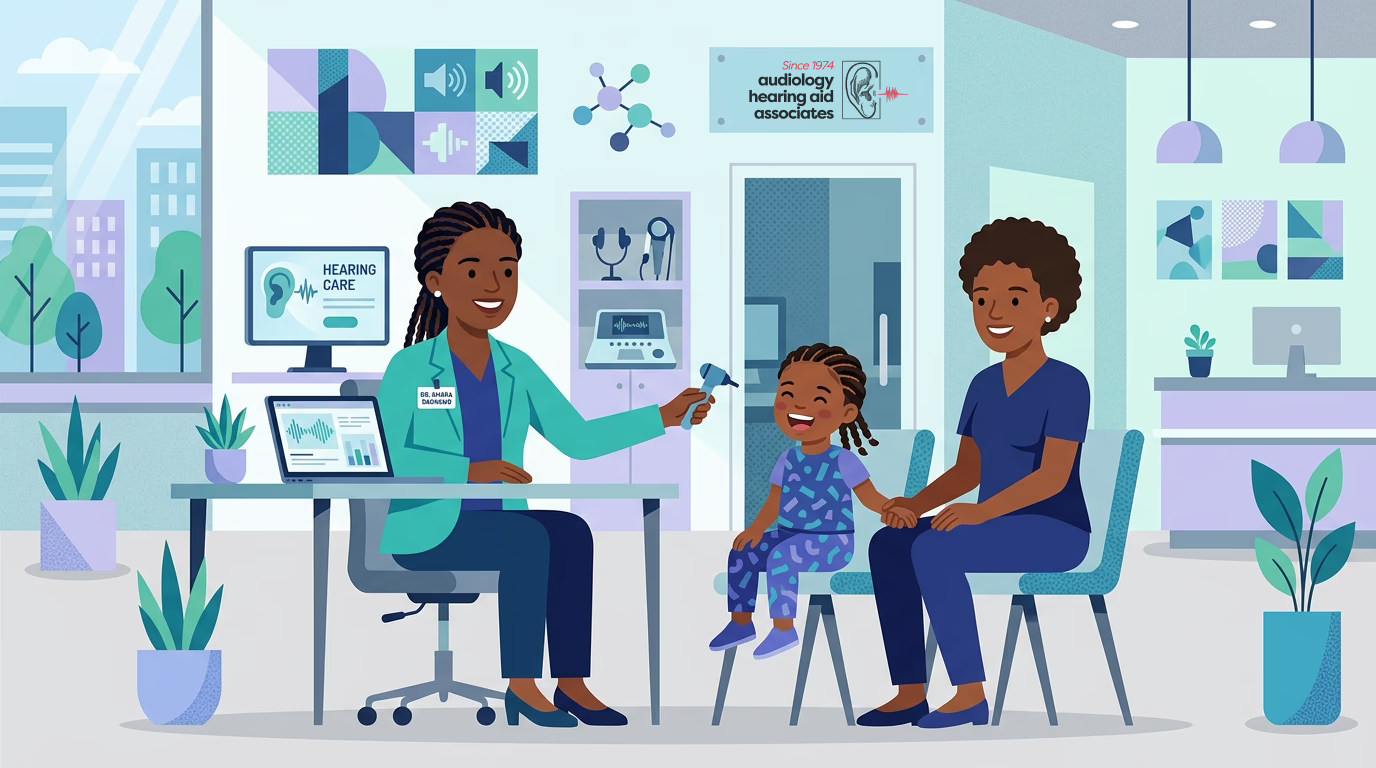
A comprehensive pediatric evaluation at a dedicated clinic feels gentle and supportive, shaped around each child’s own stage of development.
When visiting specialized providers for pediatric audiology services, clinicians use child-friendly, sound-treated spaces equipped with advanced technology. By tailoring each test, from objective OAE, ABR, ASSR, and tympanometry screenings to interactive VRA, play audiometry, and pure tone audiometry, audiologists ensure accurate, stress-free results that put children on the path to clear communication and long-term success.
If your child has missed a newborn hearing screening, demonstrated signs of language delay, or requires a follow-up assessment, you can easily schedule a comprehensive pediatric hearing assessment with our clinical team today.
Conclusion
The right test depends on a child’s age: OAE, ABR, ASSR, and tympanometry for infants, and VRA, play audiometry, and pure tone audiometry as children grow. Together, they give a complete picture of a child’s hearing, and Virginia’s EHDI 1-3-6 benchmarks and cCMV protocols help catch concerns early. If your child is due for a screening or showing signs of delay, a comprehensive hearing assessment is the next step.
Frequently Asked Questions
At what age should my child have their first hearing test?
Every newborn should get a hospital hearing screening by 1 month of age, per Virginia’s EHDI “1-3-6” guidelines. If they don’t pass, a diagnostic evaluation—often an ABR test—should follow by 3 months, with intervention starting by 6 months. Older children should also be evaluated anytime a parent notices signs of language delay or communication difficulty.
Is pediatric hearing testing safe and painless for my child?
Yes. Physiological tests like OAE, ABR, ASSR, and tympanometry are non-invasive and require no active participation—OAE measures natural sound waves from the inner ear, ABR (also called BAER) uses soft earphones and sensors to record brainwave responses, and tympanometry checks eardrum movement using air pressure. Behavioral tests like VRA, play audiometry, and pure tone audiometry are designed as simple games: a head-turn for a reward, dropping a block for a tone, or pressing a button. None of these cause discomfort.
What are the signs my child may have hearing loss?
Delayed speech or language development, trouble with grammar and reading, or difficulty with sounds like /s/, /f/, and /th/. Parents may also notice listening fatigue, since the brain works harder to decode incomplete sound. Any of these signs, or a missed newborn hearing screening, warrant a full evaluation.
What happens if my child doesn’t pass a newborn hearing screening?
Virginia’s EHDI guidelines call for a diagnostic evaluation before 3 months of age, often using an ABR test and sometimes tympanometry or ASSR. Infants who don’t pass are also recommended for cCMV testing within 21 days of life. If hearing loss is confirmed, intervention and hearing aids or other amplification should begin by 6 months.
Why is congenital CMV (cCMV) testing important for hearing loss?
cCMV is the leading non-genetic cause of pediatric hearing loss and can be progressive or appear later in childhood. Virginia protocols recommend cCMV testing within 21 days of life for any newborn who doesn’t pass their initial screening, so hearing can be monitored closely over time.
How can I prepare my child for a hearing test appointment?
Little prep is needed. For infants, OAE, ABR, ASSR, and tympanometry work best when the baby is relaxed or asleep. For toddlers, VRA and play audiometry are structured as games. Older children doing pure tone audiometry just need to understand “press the button when you hear the sound.”