
Choosing the right hearing aids can make everyday conversations, social events, and daily life easier. This guide walks you through why hearing assessments matter, the main hearing aid types, and how to pick a device that fits your hearing profile, lifestyle, and budget. We break down the options, explain current technologies, and summarize leading brands like Phonak, Signia, Widex, Starkey, Oticon, ReSound, and Unitron so you can decide with confidence. By the end, you’ll have a clear path to choosing hearing aids that work for you.
Key Takeaways
- A hearing assessment by an audiologist is essential to identify your hearing loss type and severity.
- Behind-the-Ear (BTE) and In-the-Ear (ITE) hearing aids suit different needs—power and ease of use versus discreetness.
- Digital hearing aids improve sound clarity and reduce background noise.
- Personalized recommendations consider your hearing test, lifestyle, and comfort preferences.
- AI features adapt sound automatically for better listening comfort.
- Teleaudiology enables convenient remote appointments and fittings.
- Regular cleaning and battery care extend hearing aid lifespan.
- Hearing aid prices in 2026 range from about $800 to $10,000 depending on type and services.
- Top brands include Phonak, Signia, Widex, Starkey, Oticon, ReSound, and Unitron, each with unique strengths.
- Real Ear Measurement (REM) is the clinical gold standard for accurate fittings, outperforming factory defaults.
- Consistent hearing aid use supports cognitive health and lowers dementia risk.
- New 2026 standards like Bluetooth LE Audio and Auracast™ improve sound quality and connectivity.
- Flagship 2026 models offer advanced AI and sensor technologies for modern listening needs.
- Legislation and insurance changes in 2026 improve hearing aid access and coverage.
- Leading OTC and specialty hearing aids in 2026 provide options for various needs and budgets, all FDA-registered.
What Is the Hearing Assessment Process and Why Is It Essential?
A hearing assessment identifies the type and severity of hearing loss so you get the right care. A licensed audiologist typically runs tests like pure-tone audiometry, speech recognition assessments, and tympanometry. These tests measure how well you hear different pitches and understand speech in real settings, and they help determine whether the loss is conductive, sensorineural, or mixed. An accurate diagnosis guides the choice of technology and features that will work best for you. Increasingly, AI tools assist with personalized audiograms and diagnostic insights.
AI Hearables: Personalized Audiograms & Hearing Tests
AI is adding diagnostic and personalization tools to hearing devices, including built-in hearing tests that help create tailored audiograms.
Exploring the Future Trajectory of AI-Powered Hearables: Industry Perspectives on Emerging Capabilities, 2025
Scheduling and Preparing for Your Hearing Assessment
To book an assessment, contact your primary care provider or a local audiology clinic. Bring a summary of your medical history, notes about when you notice hearing difficulty, and a list of medications. These details, plus the test results, give your audiologist a full picture of your hearing health.
The Clinical Gold Standard: Real Ear Measurement (REM)
Out-of-the-box “first-fit” settings rarely match the unique shape and acoustics of your ear. Real Ear Measurement (REM) checks the actual sound delivered inside your ear canal and ensures the hearing aid meets the prescribed targets. Studies show only around 20% of first-fit settings meet prescription goals, while REM achieves targets in over 90% of fittings—improving clarity and comfort.
Actionable Advice: Ask your audiologist whether REM is included in your fitting. It’s the best way to make sure your device is tuned correctly for your ears.
Types of Hearing Aids and Their Comparison
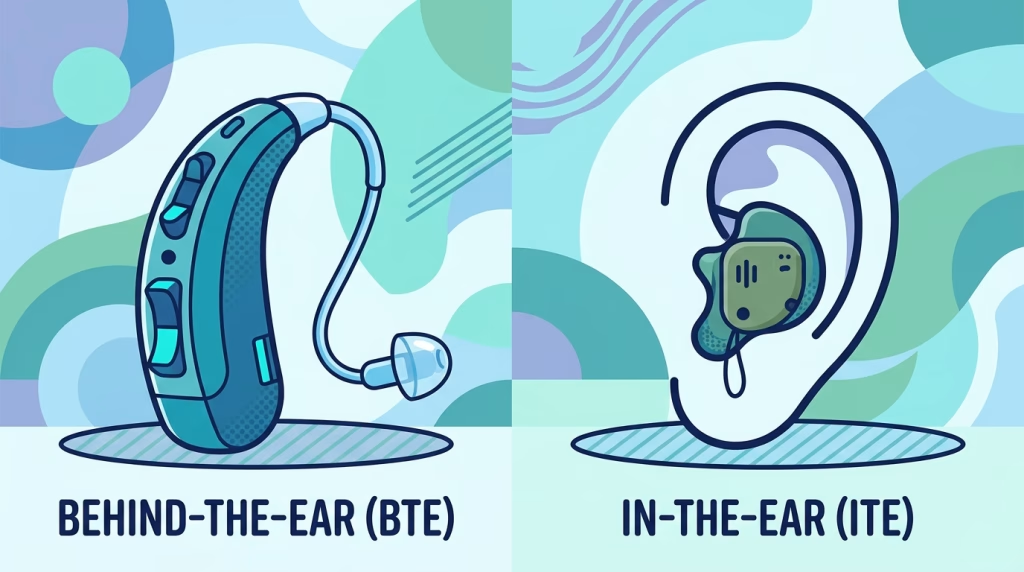
Hearing aids come in several styles to match different levels of hearing loss and personal preferences. The most common are Behind-the-Ear (BTE) and In-the-Ear (ITE). Knowing the differences helps you choose a device that fits your hearing needs and daily life.
Behind-the-Ear vs. In-the-Ear Hearing Aids
BTE hearing aids sit behind the ear and connect to an earmold or dome in the ear canal. They’re versatile, typically more powerful, and easier to handle—good for severe losses or for users with dexterity concerns. ITE devices are custom-made to fit inside the ear and are discreet, often preferred for mild to moderate loss when appearance matters.
Digital Hearing Aids: Enhanced Sound Quality
Digital hearing aids convert sound to digital signals, improving clarity and giving better control over noise reduction compared with older analog models. Programmable options let audiologists tailor settings for specific situations so you hear speech more clearly in noisy places. For more on how they work, see How Digital Hearing Aids Work (AI & Processing) and Next-Gen Processing Chips.
Personalized Hearing Aid Recommendations
Recommendations should match your hearing profile, daily routines, and comfort preferences. Audiologists combine test results with questions about your activities and goals to recommend devices and features that will help you hear more comfortably and confidently.
Criteria for Custom Hearing Aid Solutions
Choice depends on how much amplification you need across frequencies, the listening environments you face, and whether you want features like streaming, rechargeable batteries, or advanced noise reduction. Comfort, fit, and appearance also matter for long-term satisfaction.
Case Studies Illustrating Personalized Selection
For example, someone who struggles in busy restaurants may benefit from a digital BTE with strong directional microphones and noise suppression, restoring the ability to follow conversations. Personalized fittings show how the right features can transform everyday listening.
Leading Brands and Their Offerings
Brands emphasize different strengths: Phonak focuses on AI and connectivity; Signia adds motion sensors and personalized sound; Widex aims for natural sound and ease of use; Starkey integrates health sensors and AI adjustments; Oticon builds on brain-focused “brain hearing” concepts; ReSound is known for robust wireless features; and Unitron offers flexible, app-driven customization. Comparing these helps you match features to your priorities. Learn more about Oticon’s approach at Neural Interfaces.
2026 Flagship Brand Innovations
Leading 2026 platforms include:
- Phonak Infinio Ultra Sphere: Dual-chip AI reduces listening effort by 45% and offers up to 56 hours of battery life.
- Oticon Intent: 4D Sensor technology tracks movement to focus microphones on the people you want to hear.
- Starkey Omega AI: Water-resistant design with fall detection and heart-rate monitoring features.
- Signia IX (Integrated Xperience): Introducing a rechargeable completely-in-the-canal (CIC) model for a discreet experience.
- Unitron Smile: AI-trained processing that adapts across eight listening environments.
Hearing Aid Features and Technologies in 2026
Digital Noise Reduction and AI Personalization
Digital noise reduction reduces background sounds so speech stands out. AI personalization learns your preferences and automatically adjusts settings across environments for clearer listening and less effort. For detailed insights on AI sound training, see AI Sound Training.
AI for Personalized Hearing Aids & Audiology
Artificial intelligence is enabling real-time personalization and smarter algorithms in hearing devices. Cochlear implants and hearing aids use AI to improve speech understanding and comfort.
AI-Driven Innovations in Hearing Health: A Review of Artificial Intelligence Applications in Audiology and Hearing Technologies, 2025
2026 Technology Standards
Important standards shaping better hearing devices include:
- Bluetooth LE Audio and the LC3 Codec: Better sound quality, longer battery life, and lower latency. Learn more at The LC3 Codec.
- Auracast™ Broadcast Audio: Lets users receive public audio streams in places like airports and theaters without pairing—like a broadcast network for hearing aids. Details at Bluetooth LE Audio & Auracast.
Advances in Teleaudiology and Remote Fitting
Teleaudiology supports remote testing, adjustments, and follow-up care, which is especially helpful for people with mobility challenges or those living far from clinics. Remote fittings are becoming a standard option in hearing care.
Maintaining and Caring for Your Hearing Aids
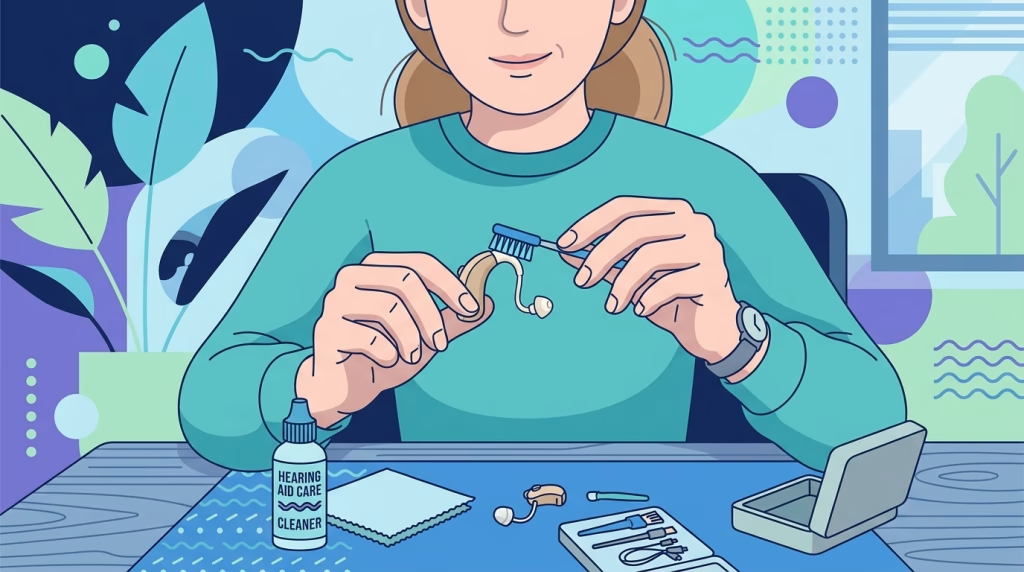
Keeping hearing aids clean and dry and checking them regularly will preserve sound quality and extend their life.
Best Practices for Cleaning and Battery Management
Wipe devices with a soft, dry cloth and keep them away from moisture. Replace or recharge batteries as recommended and keep spares stored in a cool, dry place. Follow the manufacturer’s care instructions for best results.
Preventing Common Issues Through Maintenance
Watch for earwax buildup and keep microphone and speaker openings clear. Regular clinic visits for professional cleaning and inspection help prevent performance problems and catch any changes in hearing early.
Cost and Insurance Options for Hearing Aids
Knowing expected costs and insurance options helps you plan your purchase. Prices depend on technology level, service bundles, and whether devices are OTC or prescription.
Typical Hearing Aid Costs in 2026
Costs vary by category:
- Premium Over-the-Counter (OTC) Hearing Aids: $800 – $2,000 per pair. See 2026 Pricing Categories for benchmarks.
- Premium Prescription (Rx) Hearing Aids: $6,000 – $10,000 per pair, commonly including multiple years of clinical care. For detailed tiered cost breakdowns, visit Tiered Cost Breakdown.
Entry-level devices cost less, while advanced digital aids with AI and strong connectivity are pricier. Consider the level of support and warranty when comparing prices. For more on pricing, see hearing aid prices from the Hearing Loss Association of America.
Insurance and Financial Assistance
Coverage varies by insurer—some plans cover part of the cost while others exclude hearing aids. Financial aid programs and nonprofit resources can help people without coverage. Talk with your audiologist about payment options and local assistance programs.
Medicare Update: Traditional Medicare typically doesn’t cover hearing aids. The Medicare Hearing Aid Coverage Act (H.R. 500) remains pending in committee and has not been passed as of May 2026.
State Mandates: As of May 2026, Virginia law (§ 38.2-3418.21) requires health insurers, health maintenance organizations, and corporations to provide coverage for hearing aids and related services for children 18 years of age or younger.
Clinical Standards: While not explicitly mandated by state law for all fittings, Real Ear Measurement (REM) remains the professional best practice in Virginia clinics to ensure that devices meet the $1,500 prescriptive targets allowed under the youth mandate. Hearing aids can be dispensed by otolaryngologists, licensed audiologists, or licensed hearing aid specialists.
Mandate for Minors: Coverage includes one hearing aid per hearing-impaired ear every 24 months, with a coverage cap of $1,500 per hearing aid. Families have the legal right to choose more expensive devices and pay the difference without penalty. Source
Recommendation Requirement: Coverage for children is only available if the services and equipment are recommended by an otolaryngologist (ENT). Source
Adult Coverage and Medicaid Expansion: There is currently no mandate in Virginia requiring private insurers to cover hearing aids for adults as of May 2026. However, a significant development in the 2026–2028 biennial budget (HB 30) includes a provision directing the Department of Medical Assistance Services (DMAS) to amend the State Plan for Medical Assistance. This expansion aims to provide payment for medically necessary adult hearing screenings, examinations, and aids (up to $1,500) starting in FY 2027 (July 1, 2026). A standalone bill intended to secure these adult benefits (HB 982) was introduced but remained left in committee as of February 18, 2026, shifting the primary mechanism for coverage expansion to the state budget process. Source
State Employee and Health Plan Options: The Commonwealth’s employee health plans (such as COVA Care and COVA HealthAware) offer optional expanded hearing coverage. For 2026, the state continues to pay an average of 88% of premium costs for these plans. Source
Teleaudiology Enhancements: Recent legislative updates (HB 1596 and HB 1975) have expanded the definition of “telemedicine services” in Virginia to include audio-only communication and patient-initiated consultations, which improves accessibility for remote hearing aid adjustments and follow-up care. Source
The Cognitive Connection: Hearing and Brain Health
Hearing and cognitive health are linked. Untreated hearing loss increases listening effort and is associated with a higher risk of cognitive decline.
Dementia Risk: Using hearing aids consistently is associated with a 33% reduction in dementia risk over seven years.
The MoCA-H Test: The Montreal Cognitive Assessment for Hearing Impairment (MoCA-H) is a visual screening tool designed to reduce hearing bias and is increasingly used alongside hearing evaluations.
Essential Takeaways for Choosing Your Hearing Aids
The right hearing aids can transform how you connect with others and support long-term brain health. This guide gives you the tools to understand assessments, compare device types, and evaluate leading brands so you can choose a solution that fits your life. Prioritize your hearing—better hearing supports better communication, confidence, and well-being. Explore our hearing aid options and take the first step toward clearer hearing today.
Frequently Asked Questions
What should I consider when choosing between Behind-the-Ear (BTE) and In-the-Ear (ITE) hearing aids?
Think about how much hearing help you need, how active you are, and whether you want a discreet look. BTE models are powerful and easier to handle, which helps with severe loss or dexterity issues. ITE devices are custom-fit and more subtle, usually best for mild to moderate loss. Comfort, handling, and appearance all matter for long-term use.
How can I ensure my hearing aids are properly fitted?
Ask your audiologist for Real Ear Measurement (REM) during the fitting. REM measures the sound your hearing aid actually delivers in your ear canal and confirms it meets your prescription. It’s the clinical standard for accurate, comfortable fittings, so be sure to request it.
What are the latest technologies in hearing aids for 2026?
Key advances include Bluetooth LE Audio and the LC3 codec for better streaming and battery life, Auracast™ for public audio broadcasts, and AI-driven personalization that adapts sound settings in real time. These features improve clarity, convenience, and overall listening comfort.
How often should I have my hearing aids checked by a professional?
Plan on at least one professional check-up per year for cleaning, performance checks, and software updates. If you notice sound changes, discomfort, or reduced performance, schedule an appointment sooner.
What financial assistance options are available for purchasing hearing aids?
Assistance can come from private insurance, state programs, government initiatives, and nonprofit groups. Some insurers offer partial coverage, while Medicare typically does not—though H.R. 500 aims to expand coverage. Your audiologist can help you explore payment plans and local support programs.
How can I maintain my hearing aids for optimal performance?
Keep them dry and clean, remove earwax carefully, and check openings for debris. Follow battery care recommendations and store spares properly. Regular professional cleanings and inspections will catch issues early and keep sound quality consistent.
What is the connection between hearing health and cognitive function?
Untreated hearing loss increases the mental effort needed to listen and is linked to higher risk of cognitive decline. Consistent use of hearing aids has been shown to lower dementia risk by about 33% over seven years. Tools like the MoCA-H help clinicians assess cognitive health without hearing bias.