
This article explores that human experience, the emotional and social weight of hearing loss over a lifetime, while sharing hopeful research on how much changes when people get help. (We won’t cover causes, diagnostics, or how to choose hearing aids; those are detailed elsewhere. Here, we focus on the heart of the matter.)
Key Takeaways
- Hearing loss commonly triggers emotional distress, grief, anxiety, and depression at any age.
- Untreated hearing loss often leads to social withdrawal, loneliness, and deteriorating mental health.
- Stigma and fear of seeming old or disabled typically delay treatment by 7 to 10 years on average.
- Hearing loss impacts development in children, identity in teens, employment in adults, and loneliness in older adults.
- Family members face “third-party” effects such as emotional strain and social challenges alongside the person with hearing loss.
- Hearing aids and cochlear implants can improve social quality of life, especially with aural rehabilitation.
- Virginia offers pediatric hearing-aid insurance, early detection programs, and support helping families navigate care.
- Early intervention and family-centered communication strategies improve outcomes and reduce emotional burden.
- Withdrawal, depression, or academic struggles should prompt professional evaluation and comprehensive support.
The Emotional Toll: Grief, Anxiety, and Depression
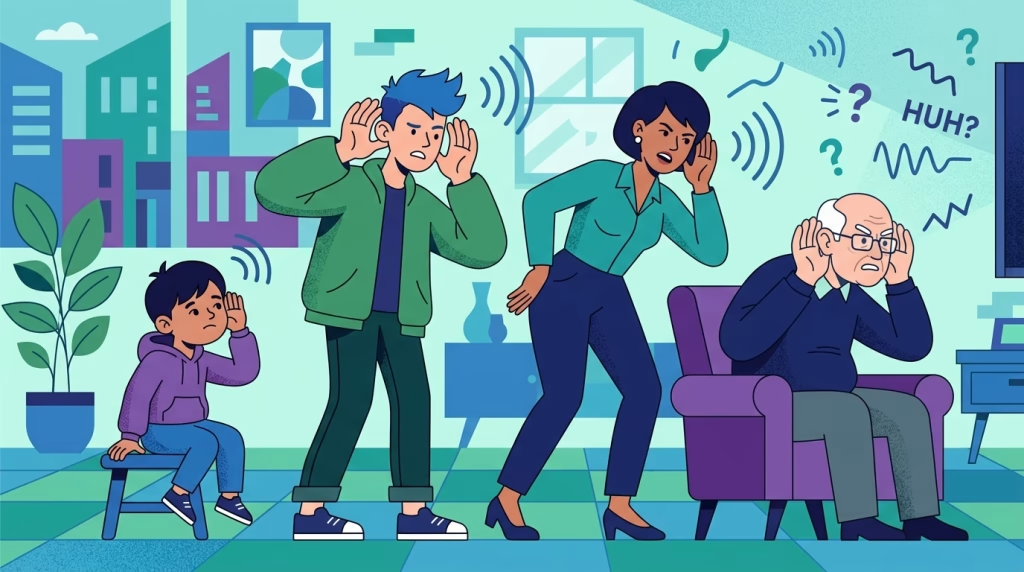
Being told you have hearing loss or gradually realizing it can trigger a grieving process. Clinicians often describe stages similar to Kübler-Ross: denial (“everyone just mumbles”), anger (“why me?”), bargaining (trying inadequate amplifiers), depression, and acceptance. People move through these stages in different orders, and families have their own experience. Uiowa
Mental health research confirms the link: a 2024 meta-analysis (Wei, Li & Gui, Frontiers in Neurology, DOI 10.3389/fneur.2024.1446262) found hearing loss raises depression risk by about 35%. Anxiety rates are similarly higher; some studies show 40% of people with sensorineural hearing loss report significant anxiety. U.S. survey data find 11.4% of adults with hearing loss have moderate-to-severe depression, versus 5.9% without.
Importantly, how disabled a person feels by their hearing loss predicts mood more than the audiogram. A cross-sectional study (When Sound Fades, PMC, 2025) showed self-perceived hearing handicap strongly predicts depression and anxiety, more than hearing thresholds. This is why the link between hearing loss and mental health requires close attention, beyond technical tests.
The Cascade: Withdrawal, Isolation, and the Cost of Waiting
Untreated hearing loss quietly pushes people out of social life. Following conversations strains energy. Misunderstandings lead to embarrassment. Many choose to avoid noisy restaurants, family reunions, or places of worship, causing withdrawal that leads to isolation, fostering depression and anxiety.
People often wait years before seeking help. Adults delay 7 to 10 years on average from noticing difficulty to treatment; Johns Hopkins Medicine estimates about 10 years. A 28-year cohort study (Simpson et al., Ear and Hearing, 2019) reported 8.9 years from candidacy to hearing aid adoption. Those lost years worsen communication and social risks.
The Stigma That Keeps People Stuck
Why the delay? Stigma is central. Hearing aids are linked to aging or disability; many fear appearing “old” or “less capable.” A Hearing Review survey found 35% hesitate to admit hearing loss publicly. Others view devices as unattractive or conspicuous, though modern aids are discreet. This stigma threatens identity, making people fear being stigmatized or seen as cognitively impaired.
Ironically, asking for repetition or answering questions incorrectly is much more noticeable than wearing hearing aids. Hiding hearing loss damages relationships and self-confidence, illustrating clearly how hearing loss affects relationships.
Across the Lifespan
Children: Highest Stakes
Hearing underpins language, learning, and friendship. Untreated hearing loss disrupts development. About 2 to 3 per 1,000 U.S. children are born with hearing loss; newborn screening in 2022 found 1.7 per 1,000 (CDC). Over 90% of deaf children have hearing parents, so many families face this anew. Cross River Therapy
Kids miss “incidental” learning, overheard vocabulary, and social cues, causing academic gaps and isolation. Research links childhood hearing loss to lower achievement, social isolation, and reduced self-esteem. Emotionally, children can feel out of place and come to believe they “can’t do school.”
Teens: Identity and Belonging
Adolescence is when fitting in matters most, and many teens resist hearing aids to avoid standing out. A study using the 2009 National Crime Victimization Survey found adolescents with hearing loss faced much higher bullying rates (50% vs 28%), especially social exclusion (26% vs 5%) and coercion (18% vs 4%). Stigma disrupts deaf teens’ sense of self. Saying “I hate my hearing aids” often pleads for acceptance, not just complaining about devices. For guidance on choices, visit How to Choose Hearing Aids.
Adults: Work, Income, and Relationships
For working adults, hearing loss affects income and partnerships. Those with hearing loss often earn less and face higher unemployment: severe hearing loss linked to 15.6% unemployment vs 7.8% for those without. Untreated hearing loss can reduce annual income by up to $30,000. A 2025 study (Jacobs et al., Frontiers in Audiology and Otology) found 12% lower employment odds for those with hearing loss, especially among Black and Hispanic individuals. At home, constant repetition, misheard cues, and missed moments strain marriages and friendships, illustrating deep social effects of hearing loss on adult life.
Older Adults: Loneliness and Quality of Life
Hearing loss is common among older adults and often causes loneliness. Studies show heightened social isolation risks. The ACHIEVE study (Powell et al., Journals of Gerontology, 2024) found a 38% loneliness prevalence in older adults with untreated hearing loss; worse hearing increased loneliness by 19%. Hearing loss also links to cognitive decline, but here it mainly threatens connection, independence, and engagement.
The Ripple Effect: Family and Caregivers
Hearing loss affects not just the individual. The World Health Organization calls this “third-party disability”, how one’s hearing loss limits family wellbeing. In a study (Scarinci et al., 2012), 98% of spouses reported some third-party disability. Partners face isolation, frustration, and grief; an AARP survey found nearly half attributed relationship breakdowns to hearing loss, and a third lost touch with family or friends. This shared burden suggests treatment benefits the whole family.
The Turning Point: What Help Actually Does
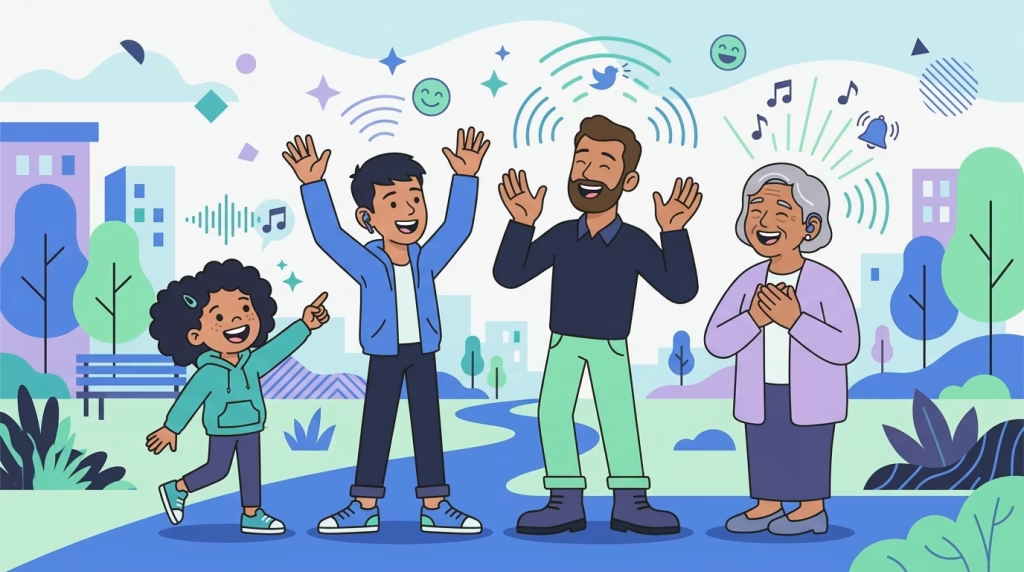
Hope lies in seeking help. A 2025 meta-analysis (Hori et al., JAMA Otolaryngology) of 65 studies with 5,911 participants found hearing aids and cochlear implants improved social quality of life significantly and reduced perceived social handicap. Longer device use meant greater benefits. A longitudinal Korean study found hearing aid use linked to fewer depressive symptoms and better quality of life, especially with strong social support — highlighting a direct positive effect on hearing loss and depression. For insights on device styles, see In The Ear vs Behind The Ear.
Devices alone are not enough. Audiologic/aural rehabilitation, counseling, communication training, family-inclusive support address emotional and social sides. Group rehab improves quality of life and reduces returns. Practical strategies help: face the speaker, reduce noise, get attention before speaking, and advocate clearly (“I hear better when you face me”). Support groups and counseling reduce isolation and build shared understanding.
Virginia-Specific Context: Laws, Programs, and Resources
Virginia supports families with concrete programs.
Pediatric hearing-aid insurance mandate. Since January 1, 2024, Virginia insurers must cover hearing aids for children 18 and younger under § 38.2-3418.21 — one aid per ear every 24 months, up to $1,500 per device with no copay when recommended by an ENT. Families may pay the difference for pricier devices. JLARC found families typically spent ~$3,700 over two years per child, including frequent ear mold changes as kids grow.
Virginia EHDI (Early Hearing Detection and Intervention). The Department of Health screens newborns, identifies hearing loss early, and links families to services — aiming for diagnosis by 3 months, intervention by 6 months. About “three in 1,000” Virginia newborns have hearing loss; ~300 babies yearly. Congenital CMV is a leading non-genetic cause with possible progressive hearing decline. VCU’s Partnership offers emotional and informational support to parents.
Medicaid and FAMIS coverage. Medicaid/FAMIS Plus covers hearing aids for children under 21 with no fees; FAMIS covers children under 19 similarly.
Virginia Department for the Deaf and Hard of Hearing (VDDHH). Offers interpreter referrals, Technology Assistance, Virginia Relay, education, a 2026 Directory, and referrals at 1-800-552-7917. No adult state program for hearing aids, but VDDHH provides resource packets. Virginia
Rural access challenges. Hearing loss is more common in rural areas. The CDC-funded Sound Check study estimated 1 in 9 Americans (37.9 million) have bilateral loss, highest rates in rural states; West Virginia tops with 18%. CDC data (2014-16) show 14% of Virginia adults self-report any hearing loss, near U.S. average. Appalachian counties have fewer audiologists, worsening access. Telehealth and regional providers help in rural Virginia.
Recommendations
- Don’t delay if you or loved ones suspect hearing loss. Recognize denial and avoidance are normal, but seeking help early strengthens relationships. Start with an audiologist evaluation.
- Parents: Follow up on newborn screening promptly. Use Virginia’s EHDI, VCU support, pediatric insurance mandate (§ 38.2-3418.21), and Medicaid/FAMIS to ease costs.
- Teens and families: Understand hearing-aid resistance as identity-related. Peer support, counseling, and open talk help more than pressure.
- Working adults: Know workplace accommodations exist. Treatment protects income and career. Use communication strategies and disclose thoughtfully.
- Families: Consider hearing loss a shared “third-party” challenge. Attend appointments together, learn communication strategies as a unit, and try group rehabilitation including partners.
- Watch for red flags: Withdrawal, depression, anxiety, academic struggles, or relationship tension warrant professional evaluation and aural rehab, not just devices.
Caveats
- Most depression/anxiety research is observational; hearing loss correlates with but may not cause these outcomes directly.
- Some workplace and quality-of-life data come from advocacy or industry surveys; they support but don’t confirm peer-reviewed findings.
- The 7 to 10 year delay to treatment is an average from mixed studies; exact delays vary.
- Rural and bilateral hearing loss prevalence differ by state and methodology; Virginia’s adult self-reported loss (~14%) isn’t identical to audiometric bilateral loss.
- Stigma, identity, and grief vary by culture and individual; grief stages are common patterns, not fixed sequences.
Conclusion
Hearing loss affects every life stage: a child’s classroom, a teen’s friendships, an adult’s career, an older person’s dinner table, and the heart of every family. Though often a quiet struggle, it brings both challenges and hope. The clearest finding is this: it doesn’t have to stay this way. With proper support — devices, counseling, communication strategies, connection — people often feel “like themselves again.” If you or someone you love in Virginia carries the quiet weight of hearing loss, the caring team at Audiology Hearing Aid Associates is ready to help you take that vital first step toward reconnection.
Frequently Asked Questions
What are long-term effects of untreated hearing loss on mental health?
Untreated hearing loss increases risk of depression and anxiety by about 35%. Communication effort often leads to social withdrawal and wellbeing declines. Staying socially active and seeking timely treatment helps reduce these risks.
How can families support loved ones with hearing loss?
Open conversations about feelings and practical communication strategies (clear speech, less noise, patience) help. Joining audiology visits and rehabilitation supports teamwork and mutual understanding.
How can individuals address stigma around hearing aids?
Education and visibility are key. Sharing positive stories, discussing benefits of modern devices, and participating in community support shift perceptions and ease help-seeking.
How does hearing loss affect children’s social development?
Hearing loss limits incidental learning and social interaction, leading to academic and social challenges. Early diagnosis and intervention provide children the best chance for language, peer engagement, and success.
What challenges do teens with hearing loss face?
Teens may resist hearing aids to avoid teasing, risking isolation and anxiety. Supportive schools, peer groups, counseling, and family dialogue promote acceptance and device use.
What resources exist for adults with hearing loss?
Community education, support groups, counseling, audiology services, and workplace accommodations improve communication and quality of life. Audiologists tailor technology and rehabilitation to individual needs.
How does early detection impact a child’s future?
Early detection allows access to supports that foster language and learning, reducing isolation and academic delays, and enhancing self-esteem and long-term outcomes.