
If you have been noticing a persistent ringing, buzzing, or whooshing sound in your ears, you are not alone. Tinnitus affects millions of people, and while it can feel isolating or overwhelming at first, there is a lot you can do about it. This guide walks you through what tinnitus actually is, why it happens, and what the most effective, evidence-backed options look like, whether you are newly diagnosed or have been living with it for years. You will also find practical lifestyle strategies and, if you are based in Virginia, a look at the local clinical resources and support networks available to you. Think of this as a starting point for understanding your options and taking your next step with confidence.
Key Takeaways
- Tinnitus affects 10 to 15 percent of adults, and understanding which type you have (subjective, objective, or pulsatile) is the first step toward finding the right treatment.
- About 80 percent of people with tinnitus also have some degree of sensorineural hearing loss, and cochlear synaptopathy (hidden hearing loss) can be present even when your audiogram looks normal.
- Tinnitus retraining therapy, cognitive behavioral therapy, and properly fitted hearing aids are the most evidence-backed approaches for meaningful, long-term relief.
- Pulsatile tinnitus synchronized with your heartbeat, sudden unilateral hearing loss, or asymmetric symptoms require prompt clinical evaluation, including MRI.
- Lifestyle changes like consistent sleep, daily stress management, and limiting alcohol and caffeine can measurably lower your perceived tinnitus intensity alongside clinical care.
- If you are in Virginia, state programs, peer support networks, and specialist clinical centers are available to support you at every stage of your tinnitus journey.
Pathophysiology and Clinical Classification of Tinnitus
If you hear ringing, buzzing, or hissing in your ears when no external sound is present, you may be experiencing tinnitus. It is the conscious perception of sound in the head or ears without any outside acoustic source. About 10 to 15 percent of adults experience it, and for roughly 1 to 5 percent the condition becomes genuinely debilitating, disrupting sleep, concentration, and emotional well-being. Understanding which type you have is the first step toward finding meaningful relief.
The three primary classifications each point toward different causes:
- Subjective Tinnitus: By far the most common form, this is a phantom auditory sensation only you can perceive. When cochlear injury or sensory deafferentation occurs, your auditory system compensates by raising its internal gain from the brainstem upward to the auditory cortex. As normal input from your ears fades, the auditory cortex reorganizes: its tonotopic maps shift, neurons grow hyper-synchronous, and the auditory cortex begins generating spontaneous signals you hear as sound. This auditory cortex-driven process sits at the center of modern tinnitus research.
- Objective Tinnitus: A rare form in which the sound originates from a real physical source inside your body, such as vascular structures or middle ear muscles, that a clinician can detect.
- Pulsatile Tinnitus: A rhythmic whooshing synchronized with your heartbeat, often pointing to vascular anomalies such as venous sinus stenosis or a dural arteriovenous fistula. Prompt MRI and vascular imaging are required if you experience this type.
Etiological Profiles and Sensorineural Hearing Loss

Tinnitus is a symptom, not a disease. If you are living with tinnitus, there is a good chance, about 80 percent, that some degree of sensorineural hearing loss is part of your picture. The most common drivers include:
- Noise Exposure: Noise exposure is the leading preventable cause. It damages outer hair cell stereocilia and disrupts signal transduction in your ear. Even years of low-level noise exposure can silently erode your cochlear function before you notice a change.
- Age-Related Loss: As your natural hearing thresholds decline, your auditory system raises its internal gain, making phantom sounds more noticeable.
- Ototoxic Medications: High-dose salicylates, loop diuretics, and certain chemotherapeutics can damage your inner ear and worsen your symptoms.
- Conductive Barriers: Conditions like otitis media, impacted cerumen, or otosclerosis reduce sound input through your ears, making internal signals more prominent.
- Somatic Factors: TMJ dysfunction and cervical spine disorders can modulate your tinnitus through somatosensory-auditory cross-talk in the brainstem.
NIH-funded research has identified cochlear synaptopathy, sometimes called “hidden hearing loss,” as a key mechanism in idiopathic tinnitus. You may have chronic tinnitus and a clinically normal audiogram, yet still have significant auditory nerve damage. A single auditory nerve fiber study found reduced electrical responses, a weakened middle-ear muscle reflex, and increased compensatory brainstem activity. A normal audiogram does not rule out tinnitus driven by auditory nerve dysfunction, so further testing is worth discussing with your provider.
Diagnostic Framework
A careful, systematic evaluation helps identify what is driving your tinnitus and flags anything that needs urgent attention.
Red Flags for Immediate Referral
- Sudden-onset unilateral hearing loss: warrants prompt corticosteroid evaluation.
- Asymmetric tinnitus: possible vestibular schwannoma; MRI is indicated.
- Pulsatile, rhythmic tinnitus: vascular anomaly until proven otherwise.
- Neurological signs: facial weakness, severe vertigo, or persistent otalgia.
If a vestibular schwannoma is confirmed or suspected, gadolinium-enhanced MRI guides next steps. Management of vestibular schwannoma ranges from surveillance to microsurgery or stereotactic radiosurgery, depending on size and growth.
Diagnostic Battery
- Case History: Your provider will ask about onset, laterality, pitch, triggers, medications, and your overall systemic health.
- Self-Report Scales: The Tinnitus Handicap Inventory (THI) and Tinnitus Functional Index measure how much your tinnitus affects your sleep and daily function.
- Otoscopy: Rules out conductive causes such as cerumen or fluid in your ears.
- Pure-Tone Audiometry: Tested from 250 Hz to 8,000 Hz, and extended to 16,000 Hz when your standard thresholds appear normal.
- DPOAEs: Can reveal subclinical outer hair cell damage in your ear even when your thresholds look normal.
- Psychoacoustic Matching: Identifies the perceived pitch and loudness of your tinnitus to guide personalized sound options.
Evidence-Based Treatment

No single cure works for every person. Your management plan will focus on lowering perceived volume, reducing emotional burden, and improving daily function, shaped around your specific needs.
Sound Therapy and Acoustic Enrichment
External sound reduces your auditory system’s tendency to focus on internal noise. Silence makes tinnitus more prominent; low-level background sound lowers the contrast and gives your auditory system competing stimuli that support habituation. Wearable devices, desktop sound machines, and apps all provide these options. Frequency-customized approaches that match and notch your specific tinnitus pitch have shown meaningful long-term relief for many people.
Tinnitus Retraining Therapy
Tinnitus retraining therapy is one of the most thoroughly studied approaches available to you. Tinnitus retraining therapy combines directive counseling with low-level broadband sound, with the goal of moving your tinnitus from a threat-associated signal to a neutral one. Tinnitus retraining therapy works by pairing counseling, which reduces your limbic and autonomic reaction, with continuous low-level sound enrichment that prevents your auditory system from amplifying internal noise. If you pursue tinnitus retraining therapy, you will typically complete 12 to 18 months of structured sessions. Tinnitus retraining therapy suits people with moderate-to-severe bothersome symptoms who can commit to consistent participation. Some providers combine tinnitus retraining therapy with cognitive approaches if your distress is primarily anxiety-driven. Because the FDA has not approved any drug specifically for tinnitus, non-pharmacological protocols like tinnitus retraining therapy sit at the center of guideline-based care.
Cognitive Behavioral Therapy and Mindfulness
CBT is the most thoroughly validated counseling approach for bothersome tinnitus. It helps you reframe negative thought patterns tied to your tinnitus, interrupting the cycle of autonomic arousal that keeps your auditory system fixed on the phantom signal. Mindfulness-Based Tinnitus Stress Reduction (MBTSR) and Acceptance and Commitment Therapy (ACT) build on these gains through guided breathing and body awareness, lowering the stress response that worsens perception. Managing your stress matters more than many people expect: even modest reductions in daily stress can measurably lower your perceived tinnitus intensity.
Hearing Aids and Combination Devices
If you have co-occurring sensorineural hearing loss, a well-fitted hearing aid restores ambient sound, reduces auditory contrast, and eases the listening effort that worsens your symptoms. Most modern hearing aid devices include built-in sound generators, so your audiologist can stream customized sounds alongside amplification. Cochrane reviews found that both hearing aid use and standalone sound generators produce meaningful reductions in tinnitus severity, though evidence does not yet favor one modality over the other.
Emerging Interventions
- Bimodal Neuromodulation: Combines customized sound with mild electrical pulses to the tongue or neck. Paired stimulation retrains your auditory system’s sensory pathways, reducing neural hyperactivity in the auditory cortex over time. This approach directly targets auditory cortex plasticity, the same auditory cortex reorganization that generates your phantom sound. Research into auditory cortex-targeted neuromodulation is ongoing, with several devices in late-stage trials.
- Cochlear Implantation: If you have severe-to-profound hearing loss and debilitating tinnitus, direct auditory nerve stimulation via cochlear implant can restore sensory input and suppress phantom noise.
- Vascular Interventions for Pulsatile Tinnitus: At specialized centers, interventional neuroradiologists treat the vascular abnormalities that cause pulsatile symptoms. Your workup begins with MRI and MR angiography; minimally invasive procedures such as venous stenting can provide lasting relief.
Lifestyle Modifications and Self-Management
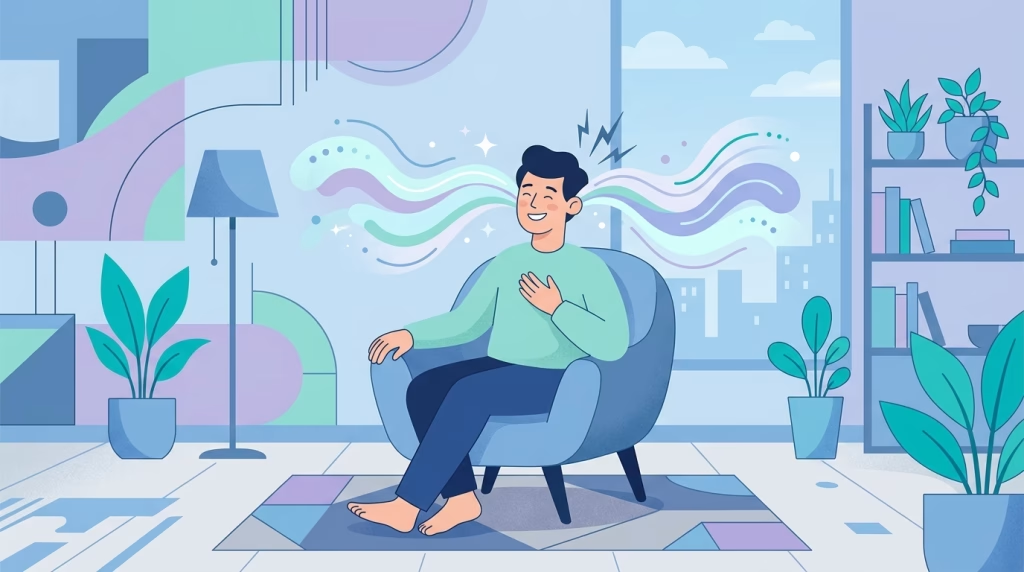
Research from the University of Virginia shows that managing secondary symptoms, particularly sleep disruption and physical tension, substantially lowers the perceived burden of tinnitus for those living with the condition every day. Here is what you can do on your own to support your progress.
- Sleep: Sleep deprivation lowers your tolerance for sensory discomfort. A consistent pre-sleep routine and low-level background sound from a sound machine or under-pillow speaker prevent the silence that amplifies internal noise in your ears.
- Stress and Autonomic Management: Daily practices such as biofeedback, progressive muscle relaxation, diaphragmatic breathing, and regular exercise calm the stress response that worsens your perception. Sustained attention to stress management compounds in benefit over time.
- Head, Neck, and Jaw Pain: Muscle tension from TMJ dysfunction or cervical issues directly affects your auditory pathway; physical therapy or dental appliances can reduce your symptom severity.
- Stimulant Limits: Alcohol, caffeine, and nicotine affect localized blood flow and can worsen your symptoms. Overusing earplugs in normal environments should also be avoided, as it sensitizes your ears to internal noise.
- Cognitive Reframing: Simple daily techniques, such as noting “My auditory system is scanning, but this is not a threat,” help you interrupt hypervigilance and support natural habituation.
Virginia’s Clinical Infrastructure and Support Networks
If you are in Virginia, you have access to a well-developed network of agencies, clinical facilities, and peer groups supporting people living with tinnitus and hearing loss.
State Programs and Assistive Technology
- VDDHH (Virginia Department for the Deaf and Hard of Hearing): Removes communication barriers statewide. Services and directories are available at the VDDHH Portal.
- Technology Assistance Program (TAP): Provides assistive devices such as amplified telephones, FM systems, and signalers on a loan-to-own basis. Virginia veterans with honorable discharge automatically qualify at no cost.
Peer Support
The Hearing Loss Association of America (HLAA) has active Virginia chapters in Virginia Beach, Newport News, Greater Richmond, the Rappahannock area, and Northern Virginia (HLCNoVA).
Major Clinical Centers
- UVA Health (Charlottesville and Richmond): A multidisciplinary team of neurotologists, audiologists, and interventional neuroradiologists providing advanced imaging and minimally invasive vascular treatment for pulsatile symptoms.
- VCU Health Audiology and Balance Center (Richmond): Comprehensive diagnostic services, device fittings, and medical management for complex ear and hearing disorders.
- Virginia Ear Nose and Throat (Richmond): Board-certified ENT physicians and audiologists designing customized long-term management plans.
- The Hearing Clinic (Blacksburg and Salem): Founded by Dr. Richard Harrell, a contributor to Virginia’s universal infant hearing screening protocol; offers advanced diagnostics, tinnitus counseling, and personalized device fittings.
Conclusion
Managing tinnitus well takes a personalized, whole-person approach that addresses both the physical and emotional sides of living with the condition. Structured sound enrichment, tinnitus retraining therapy, cognitive behavioral techniques, and a properly fitted hearing aid each offer proven paths toward meaningful, long-term relief. Combined with Virginia’s state programs and community support networks, you have real options for protecting your well-being at every stage of the journey.
Frequently Asked Questions
Can tinnitus occur even if a hearing test shows normal results?
Yes. A standard pure-tone audiogram cannot detect cochlear synaptopathy (“hidden hearing loss”). NIH-funded research has shown that people with chronic tinnitus and normal audiograms often have significant auditory nerve damage, reduced electrical responses, and increased compensatory brainstem activity. DPOAE testing and ultra-high-frequency audiometry can help reveal this subclinical damage in your ear.
What is the difference between pulsatile tinnitus and regular tinnitus?
Regular subjective tinnitus is a constant or intermittent ringing or buzzing caused by anomalous neural activity in your auditory system. Pulsatile tinnitus produces a rhythmic whooshing synchronized with your heartbeat and can sometimes be detected by a clinician. It frequently signals a vascular abnormality such as arterial stenosis, a vestibular schwannoma-adjacent lesion, or venous sinus stenosis, and requires prompt MRI and MR angiography.
How does tinnitus retraining therapy differ from standard sound therapy?
Standard sound therapy uses background sound mainly to mask or reduce tinnitus contrast. Tinnitus retraining therapy adds structured directive counseling to specifically retrain your limbic and autonomic responses to the sound. Where standard sound therapy aims for immediate perceptual relief, tinnitus retraining therapy targets long-term neurological habituation: the goal is for your auditory system to reclassify the tinnitus signal as neutral and stop prioritizing it.
Are there FDA-approved medications for tinnitus?
The FDA has not approved any medication specifically for tinnitus. The European Multidisciplinary Guideline (Cima et al., 2019) similarly advises against using antidepressants, anxiolytics, or dietary supplements as primary treatments, given the lack of supportive evidence. Pharmacological management is reserved for treating specific comorbid conditions such as depression or severe insomnia.
What lifestyle changes can reduce tinnitus severity?
Improving your sleep quality, managing daily stress through breathing and relaxation exercises, limiting alcohol and caffeine, and addressing head or jaw tension through physical therapy can all meaningfully lower your perceived tinnitus intensity. Avoiding complete silence at night by using a sound machine and practicing daily cognitive reframing also support the natural habituation process for your auditory system.