
Hearing loss is common across the United States — including here in Virginia — and it can quietly make everyday life harder. It’s the third most common chronic condition in the U.S., affecting about 1 in 7 Americans (roughly 50 million people). Knowing the causes, types, and early signs of hearing loss helps people get care sooner and protect their communication, relationships, and quality of life. This article gives a clear overview of how hearing loss happens, the different kinds of impairment, early warning signs, how it’s diagnosed, and what treatment or support options are available.
Research underscores how complex hearing is and how crucial inner ear health is to preserving it.
Hearing Loss Forms, Causes, and Inner Ear Biology
Hearing loss is the most common form of sensory impairment in humans and manifests in many forms, ranging from deafness at birth to slow progressive hearing loss during the ageing process. Hair cells in the inner ear are the sensory cells for the detection of sound; hair cells are frequently affected in different forms of hearing loss and they are a common target for therapeutic intervention in various forms of the disease.
New treatment options for hearing loss, U Müller, 2015
Key Takeaways
- About 1 in 7 Americans live with hearing loss — it’s the third most common chronic condition in the U.S.
- Major causes include loud noise exposure, age-related changes, and ear infections; some cases are temporary, others permanent.
- Sensorineural, conductive, and mixed hearing loss are different conditions that call for different evaluations and treatments.
- Early signs include trouble following conversations, tinnitus, sounds seeming muffled, and often asking people to repeat themselves.
- Sudden Sensorineural Hearing Loss (SSHL) is an emergency — quick treatment improves the chance of recovery.
- Comprehensive audiometry and newer diagnostic tools help detect hearing loss earlier and guide better care.
- Protecting ears from loud noise and early intervention reduce long-term risk and support hearing health.
- Virginia requires private insurers to cover pediatric hearing aids and offers state programs to help families and individuals access care.
What Are the Main Causes of Hearing Loss?
Hearing loss can come from several sources, each affecting how well sound reaches and is processed by the ear and brain. The most common contributors are noise exposure, aging, and infections — and these can produce either temporary or lasting changes in hearing. Loud sounds damage delicate inner ear structures over time; age-related changes gradually reduce sensitivity to higher frequencies; and some infections cause inflammation or fluid that interferes with hearing. Recognizing these causes helps guide prevention and treatment choices.
Additional studies highlight how widespread hearing loss is and emphasize the need to address preventable risks.
Understanding Hearing Loss: Prevalence, Impact, and Preventable Causes
Hearing loss is one of the most common disabilities affecting both individual and public health in the United States. It has been linked to multiple physical, cognitive, and psychosocial outcomes and is associated with problematic health care use and higher medical expenses. Hearing loss affects approximately 1 in 7 Americans, with prevalence increasing with age. Notably, many cases, such as those involving idiopathic sudden sensorineural hearing loss (SSHL) and noise-induced hearing loss, are preventable and can be treated effectively and in a timely manner.
Diagnostic accuracy of smartphone-based audiometry for hearing loss detection: meta-analysis, CH Chen, 2021
How Does Noise Exposure Lead to Hearing Impairment?
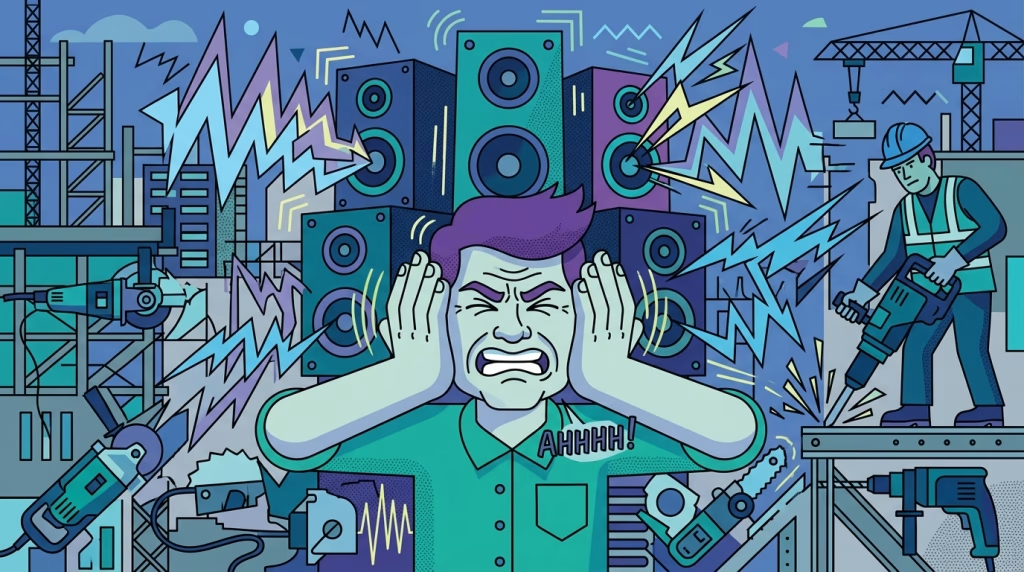
Noise damages the tiny hair cells inside the cochlea that turn sound into nerve signals. Repeated or very loud sounds — from concerts, power tools, or industrial settings — can permanently harm those cells, causing noise-induced hearing loss. How loud the sound is and how long you’re exposed determine the extent of damage. Practical prevention, like using ear protection in noisy places, can greatly lower risk.
What Role Do Aging and Infections Play in Hearing Loss?
Aging commonly causes gradual hearing loss (presbycusis), often first affecting higher-frequency sounds and speech clarity. Genetics, health conditions, and lifestyle can speed this process. Ear infections, especially middle-ear infections like otitis media, can cause fluid, inflammation, and temporary or lasting hearing trouble if not treated. Vaccines, prompt medical care for infections, and regular hearing checks help reduce these risks.
Sudden Sensorineural Hearing Loss (SSHL): A Medical Emergency
Sudden Sensorineural Hearing Loss (SSHL) is a rapid loss of hearing in one ear that happens within 72 hours or less. This is an urgent medical problem — early treatment with corticosteroids can improve the odds of recovery and help prevent permanent hearing loss. If you or someone you know experiences sudden hearing change, seek immediate medical attention. Learn more about SSHL from the National Institute on Deafness and Other Communication Disorders: National Institute on Deafness and Other Communication Disorders.
Which Types of Hearing Impairment Exist?
Hearing loss is usually classified as sensorineural, conductive, or mixed. Each type points to where the problem occurs — in the inner ear or nerve, in the outer or middle ear’s sound-conducting structures, or both — and that distinction guides testing and treatment choices.
What Is Sensorineural Hearing Loss and Its Characteristics?
Sensorineural hearing loss happens when the inner ear (cochlea) or the auditory nerve is damaged. Common causes include aging, noise exposure, and genetic factors. People with sensorineural loss often struggle to hear soft sounds and to understand speech in background noise. Treatments include hearing aids and, for some people, cochlear implants — both of which can meaningfully improve hearing and communication.
How Does Conductive Hearing Loss Differ from Other Types?
Conductive hearing loss occurs when sound has trouble passing through the outer or middle ear to reach the inner ear — examples include earwax blockages, middle-ear fluid, or structural issues. Unlike sensorineural loss, conductive problems are often treatable with medical care or surgery, such as removing impacted earwax or repairing middle-ear structures.
What Are the Early Signs and Symptoms of Hearing Loss?

Spotting hearing loss early makes a big difference. Common early signs are trouble following conversations (especially in noisy places), persistent ringing or buzzing (tinnitus), muffled sounds, and frequently asking others to repeat themselves. Importantly, untreated hearing loss is a modifiable midlife risk factor for dementia, so earlier detection and management support both hearing and cognitive health.
Early diagnosis and intervention — especially for children — lead to measurably better developmental outcomes.
Early Diagnosis and Intervention for Childhood Hearing Loss
As the age of diagnosis and intervention is delayed, the rate of delay in the development domains seems to be increasing, which is statistically significant (p< 0.001). Children with hearing loss develop similar outcomes in comparison with their normal auditory peers once they are diagnosed before 6 months and benefit from early intervention services.
Developments of children with hearing loss according to the age of diagnosis, amplification, and training in the early childhood period, 2019
Virginia’s 1-3-6 Pediatric Benchmark for Hearing Health
Virginia follows the national “1-3-6” guideline: screen newborns by 1 month, confirm hearing status by 3 months, and start intervention by 6 months. The state has lowered the average age of diagnosis to about 65 days, which helps children get the support they need for speech and language development. Parents should prioritize newborn screening and timely follow-up. Learn more about Virginia’s Early Hearing Detection and Intervention (EHDI) program: Virginia EHDI.
How to Recognize Difficulty Hearing Conversations and Tinnitus?
Difficulty hearing conversations often shows up as straining to follow speech, missing words, or needing repetition — especially in noisy rooms. Tinnitus — perceived ringing, buzzing, or other sounds — frequently accompanies hearing loss and can add stress or sleep trouble. If these signs appear, schedule a comprehensive hearing evaluation to find out what’s going on and which steps will help most.
What Are Common Symptom Checklists for Early Hearing Impairment?
Watch for these common early indicators of hearing trouble:
- Struggling to hear in noisy places: Conversations are hard to follow in restaurants, crowds, or group settings.
- Asking others to repeat themselves: Frequently missing words or needing repetition during routine talks.
- Experiencing ringing in the ears: Noticing persistent or recurring sounds that aren’t in the environment.
- Awareness of cognitive risk: Understanding that untreated hearing loss in midlife is a modifiable risk factor for dementia.
If you notice one or more of these signs, a professional evaluation can clarify the cause and next steps.
How Is Hearing Loss Diagnosed Through Comprehensive Assessments?
Diagnosing hearing loss involves a set of tests that measure how well you hear across different pitches and loudness levels, plus middle-ear function and speech understanding. These evaluations pinpoint the type and degree of loss so clinicians can recommend the right treatment or support.
What Does an Audiometric Hearing Assessment Involve?
An audiometric exam typically asks you to listen to tones through headphones and indicate when you hear them, along with speech tests to assess clarity and understanding. The audiologist reviews medical history, ear health, and test results to determine the hearing profile and build a tailored plan — whether that’s monitoring, amplification, medical care, or referral for further treatment.
How Do Emerging Diagnostic Technologies Improve Detection?
New tools like automated audiometry, smartphone-based tests, and tele-audiology are expanding access to reliable hearing screening and diagnosis. These technologies can speed up detection, help reach people who live far from clinics, and support timely referrals to in-person care when needed.
What Treatment Options Are Available?
Treatment depends on the type and severity of hearing loss. Options include medical or surgical treatment for conductive causes, hearing aids for many sensorineural losses, and cochlear implants for suitable candidates. Rehabilitation and communication strategies also play an important role in improving daily life.
An audiologist measures your hearing, recommends a device style, and adjusts settings for clarity and comfort. Proper fitting and follow-up care are key to getting the best results. If you want to learn more: How to Choose Hearing Aids: Expert Tips and Insights.
Can Hearing Loss Be Prevented or Managed Effectively?
You can reduce the chance of hearing loss by limiting loud sound exposure, using ear protection in noisy environments, and scheduling regular hearing checks. For people already experiencing hearing loss, strategies like hearing aids, communication coaching, and assistive technologies can substantially improve daily communication and quality of life.
Conclusion
Hearing loss is common but often manageable. Understanding its causes, recognizing early signs, and getting timely evaluation open the door to effective treatments and support. If you have concerns, schedule a comprehensive hearing assessment — and explore local Virginia resources to help you or a loved one stay connected and engaged.
Frequently Asked Questions
What are the long-term effects of untreated hearing loss?
Leaving hearing loss untreated can lead to social withdrawal, anxiety, depression, and challenges at work or school. Research links untreated hearing loss to higher risk of cognitive decline and dementia in midlife. Early treatment — such as hearing aids, cochlear implants, or communication support — can reduce these risks and improve quality of life.
How can I prepare for a hearing assessment?
Bring any past medical records or prior hearing tests and make a note of when and where you have trouble hearing. Avoid loud noise before the appointment and come rested. It can help to bring a family member or friend to describe observed changes and to support discussion about options.
What lifestyle changes can help prevent hearing loss?
Limit exposure to loud sounds, use hearing protection at noisy jobs or events, and get regular hearing checks. Healthy habits — like not smoking, managing chronic conditions (diabetes, hypertension), and eating a balanced diet — also support ear health. Staying informed and using protection when needed are practical steps to preserve hearing.
Are there any specific treatments for Sudden Sensorineural Hearing Loss (SSHL)?
SSHL is usually treated as an emergency; corticosteroids are the standard initial therapy and are most effective when started quickly. In some cases, additional treatments such as hyperbaric oxygen therapy may be considered. Urgent medical evaluation is critical to maximize the chance of recovery.
What role do genetics play in hearing loss?
Genetics can be a major factor in some types of hearing loss, including syndromic conditions like Usher or Waardenburg syndromes and non-syndromic inherited hearing loss. Genetic testing can clarify causes and guide family planning and earlier intervention when appropriate.
How can I support a loved one with hearing loss?
Encourage them to get a hearing evaluation and offer practical communication support: face them when speaking, reduce background noise, speak clearly without shouting, and be patient with repetition. Emotional support and learning about hearing options together make a big difference.